This site contains links to affiliate websites, and I receive an affiliate commission for any purchases made by you on the affiliate website, at no extra cost to you. Thanks!
In June 2026, I returned to Spain to embark on my second Camino de Santiago, this time walking from Vigo to Santiago with my best friend, Marcy.
When Marcy first asked me if I wanted to join her on the Camino, I wasn’t sure what to say. I had already walked the Camino Portugués two years earlier, completing the route from Porto to Santiago on my own. Part of me wondered if I really needed to do it again.
But the more I thought about it, the more nostalgic I became. I found myself thinking about the early mornings walking out of town, the long days on the trail, the conversations with other pilgrims, and the feeling of accomplishment when you finally make it to Santiago de Compostela.
And even though I had already walked this Camino route, I knew my second experience would be completely different. My first Camino was a solo journey. This time, I would be sharing the experience with my friend as she walked her first Camino. I was excited to be by her side through the highs and lows and to watch her experience the same magic that made me fall in love with the Camino.
In this post, I’ll walk you through our complete 5-day Camino Portugués from Vigo to Santiago, including where we stayed each night, what the trail was like, where we stopped for food and my honest thoughts on each stage. So if you’re thinking of walking the final 100 kilometers of the Camino, this guide will give you a realistic idea of what to expect.
Save this post for later!
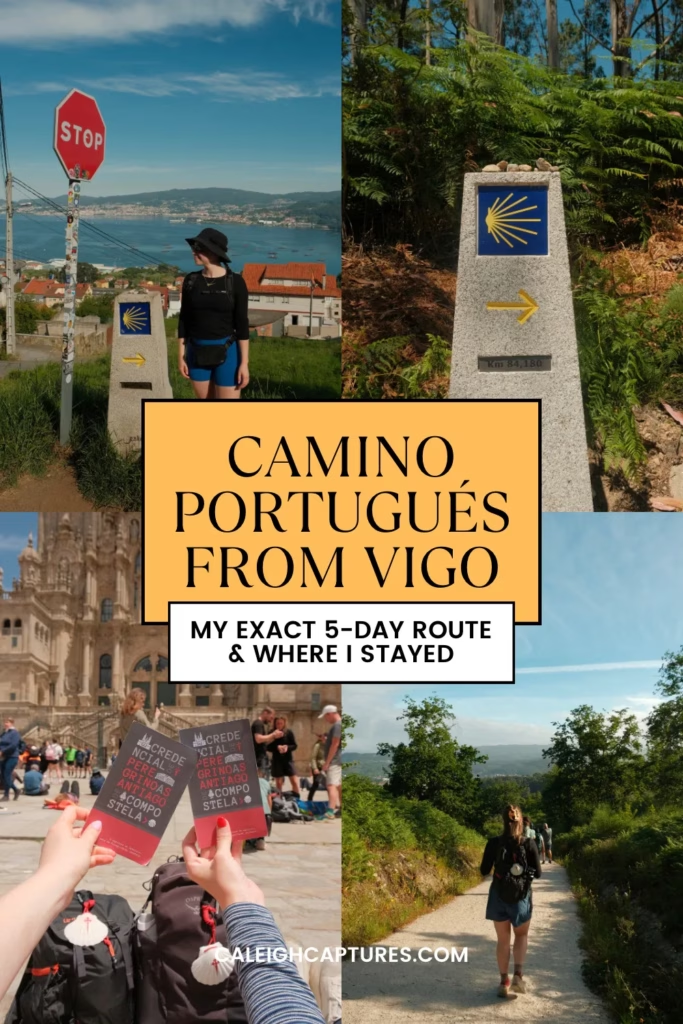
Check out my other Camino de Santiago blog posts here!
Everything I Wish I Knew Before Walking my First Camino de Santiago
Walking the Camino de Santiago Alone: My Solo Camino Portugues
Camino de Santiago Packing Guide: The most important essentials
Where to Stay on the Camino de Santiago: A Guide to Every Type of Accommodation
How Long Do You Really Need for the Camino Portugués?
My Complete 2-Week Coastal Camino Portugués Route
Best Time to Walk the Camino Portugues: May vs June
About the Camino Portugués
The Camino de Santiago is a network of pilgrimage routes that all lead to the Cathedral of Santiago de Compostela in Galicia, Spain. The Camino Frances, Camino del Norte, and Camino Portugués are the most popular routes, but there are actually dozens of different paths you can follow, taking anywhere from a few days to a few months. In recent years, the Camino Portugués has become incredibly popular, officially surpassing the Camino Frances as the most walked Camino route.
The full Camino Portugués begins in Lisbon and continues north through Portugal and Spain before reaching Santiago. Most pilgrims choose to start in Porto, which typically takes around two weeks to complete. That’s the route I walked during my first Camino, which you can read about here.
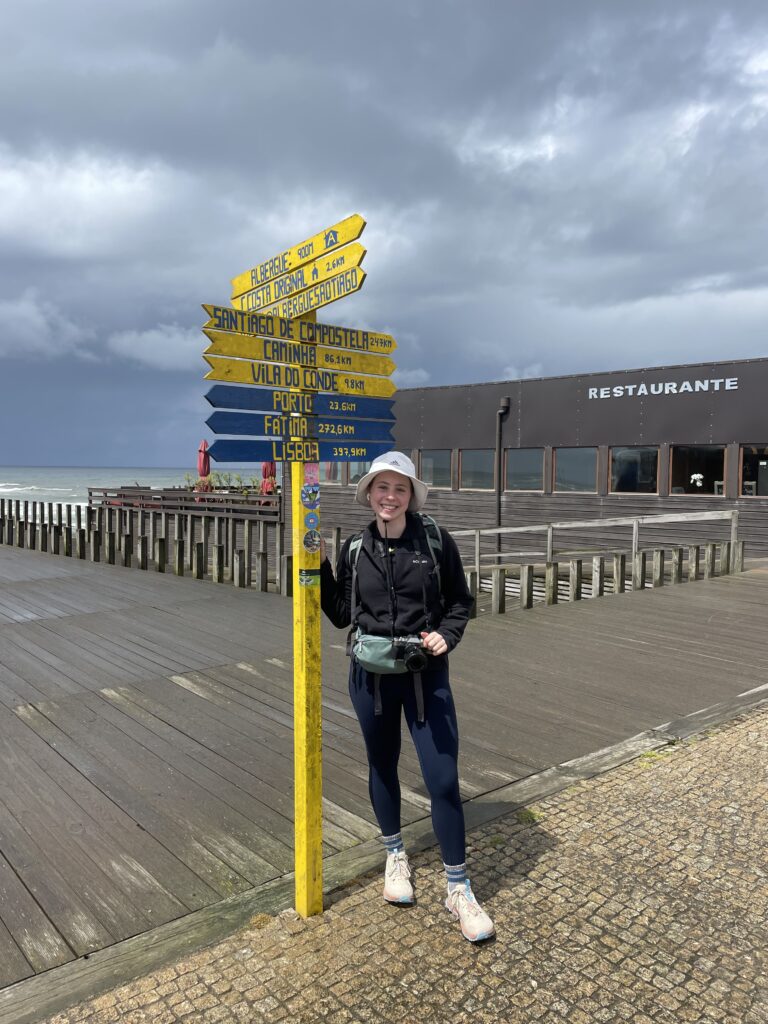
The Camino Portugués itself has multiple routes: the Central route which travels inland through historic towns and countryside; the Coastal route which travels closer to the shore; and the Litorial route which literally hugs the Atlantic coastline most of the way towards Santiago.
For this 5 day trip, we started in Vigo, which technically sits along the Coastal Route. But after Redondela, the first major stop after Vigo, the Coastal and Central routes merge and continue together all the way to Santiago.
One reason Vigo has become such a popular starting point is because it sits just over 100 kilometers from Santiago. To receive a Compostela, the official certificate proving you’ve completed the Camino, pilgrims must walk at least the final 100 kilometers. So at approximately 102 kilometers from Santiago, Vigo is the perfect starting point if you only have a week available but still want to experience a true Camino pilgrimage.
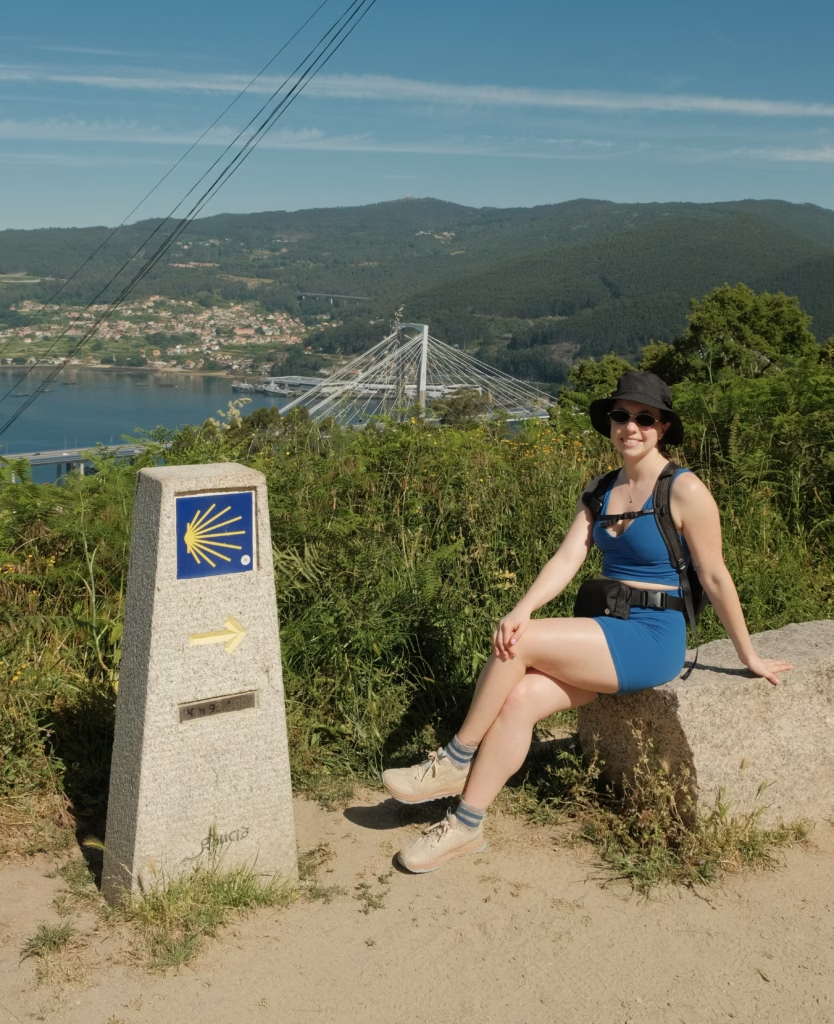
How This Camino Was Different from My First One
Even though I walked the same route, this Camino felt completely different from the one I walked in 2024.
The biggest difference was that I wasn’t alone. During my first Camino, I spent hours walking by myself, reflecting, listening to podcasts, and occasionally chatting with other pilgrims. This time, I had someone beside me every step of the way. We shared the difficult climbs and celebrated together at the end of the day.
Another major difference was that we used luggage transfer services instead of carrying our backpacks. For my first Camino, I carried my 20 lb backpack on my back everyday. it was my first time doing a thru-hike like this and my body really wasn’t prepared for the extra weight.
Read More: Camino de Santiago Packing Guide
This time, we used Pilbeo, a luggage transfer service designed specifically for Camino pilgrims. Each morning, we left our bags at our accommodation, and they were waiting for us when we arrived at our next stop. The service costs €7 per bag per day and was definitely worth it, especially on the longer walking days. The only challenge was making sure every accommodation we booked could accept luggage deliveries, since some pensions, guesthouses, and homestays don’t have front desks.
We also stayed almost exclusively in private rooms rather than albergues. Since Marcy and I were splitting the cost of accommodations, we decided to stay in hotels, pensions, and private rooms throughout the trip.
Some pilgrims will say that albergues, despite how crowded and dirty they may be, are an essential part of the Camino experience. Personally, I love having a private room at the end of a long walking day. Having a quiet place to shower, relax, and get a good night’s sleep made the experience feel much more comfortable.
The final difference was that we walked in June instead of May, which is when I walked the last one. I noticed that the Camino was significantly busier, with a crowded trail and long lines at every cafe, bathroom, and stamp opportunity. This could also be due to the increase in popularity of the Camino Portugués in the past two years. something I noticed almost immediately: the Camino was significantly busier than I remembered.
I talk more about the differences I noticed between May 2024 and June 2026, in this post.
Want to learn more about the Camino?
Explore my library of posts all about the Camino Portgues!
- Never heard of the Camino? Read Everything I Wish I Knew Before First Camino de Santiago.
- Want to walk the Camino solo? Read Walking the Camino de Santiago Alone
- Don’t know what to pack? Read Camino de Santiago Packing Guide
- Looking for a longer route? Read My Complete 14-day Coastal Camino Portugués
Camino Portugués from Vigo Stages & Accommodations Summary
| Day | Start | End | Distance (KM) | Distance (MI) | Accommodation | Price | Rating |
|---|---|---|---|---|---|---|---|
| Day 0 | Vigo | Hotel Atlantico | €69 | 9/10 | |||
| Day 1 | Vigo | Souxuste | 20.7 | 12.9 | Casa D’Mina | €89 | 10/10 |
| Day 2 | Souxuste | Pontevedra | 15.7 | 9.7 | Acola Rooms | €66 | 9/10 |
| Day 3 | Pontevedra | Caldas de Reis | 21.3 | 13.2 | Pension Villa Mayer | €53 | 8/10 |
| Day 4 | Caldas de Reis | Padron | 17.8 | 11.1 | Albergue do Miega | €84 | 9/10 |
| Day 5 | Padron | Santiago | 26.2 | 16.3 | Hotel Universal | €140 | 8/10 |
Day 0: Arriving in Vigo
I arrived in Vigo the day before starting the Camino, landing at around 4 PM after flying from New York to Madrid overnight and then connecting to Vigo. If possible, I would recommend giving yourself an extra day before starting the Camino to adjust to the time change and get settled. However, with my schedule and available flights, I could only arrive the day before. But everything worked out just fine.
My friend Marcy and I spent the afternoon walking around Vigo, picking up a few last-minute things, and grabbing dinner before heading to bed early. I was exhausted from spending the night on a plane and wanted to make sure I got a solid eight hours of sleep before starting the Camino the next morning.
Where We Stayed in Vigo
We stayed at Hotel Atlántico, which I would highly recommend if you’re starting your Camino from Vigo.
The location was excellent, right near the waterfront and on the Camino route. Our room was spacious with two beds, making it perfect for two people walking together. Breakfast wasn’t included, but we paid €10 each for the buffet breakfast at the restaurant next door, which was decent.
Price: €69
Rating: 9/10
Book your stay at Hotel Atlantico here.
Day 1: Vigo to Souxuste (20.7 km)
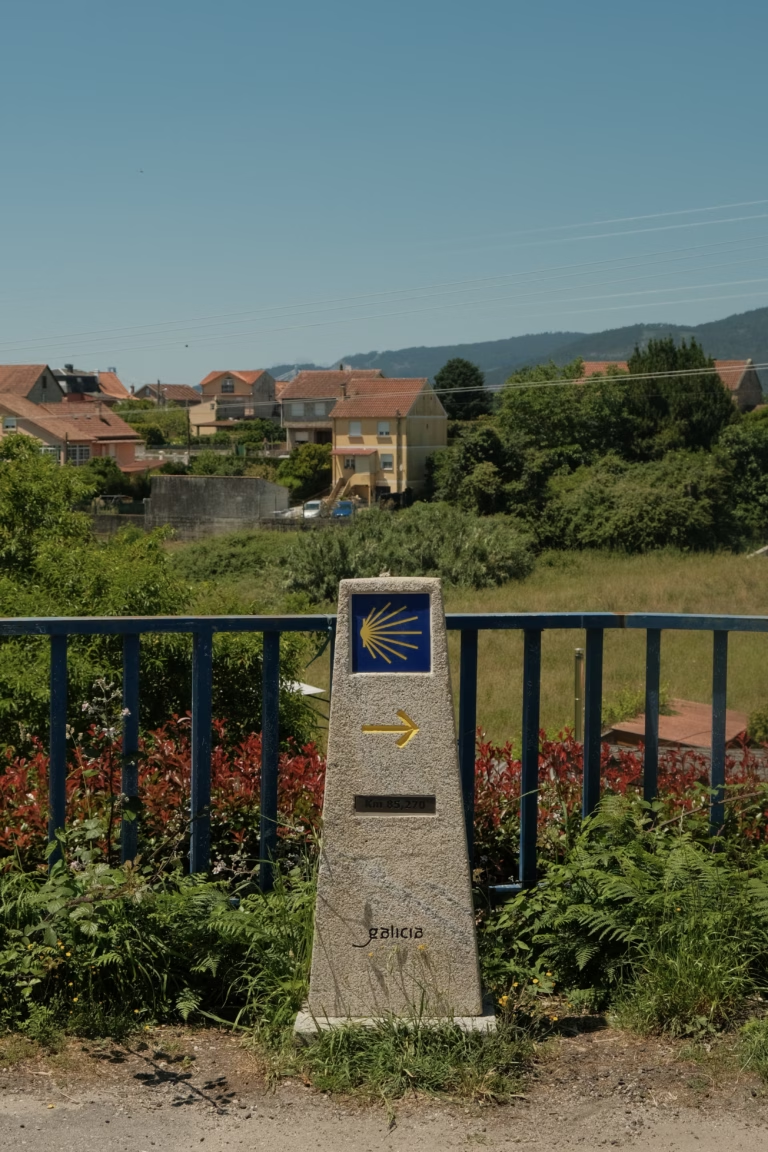
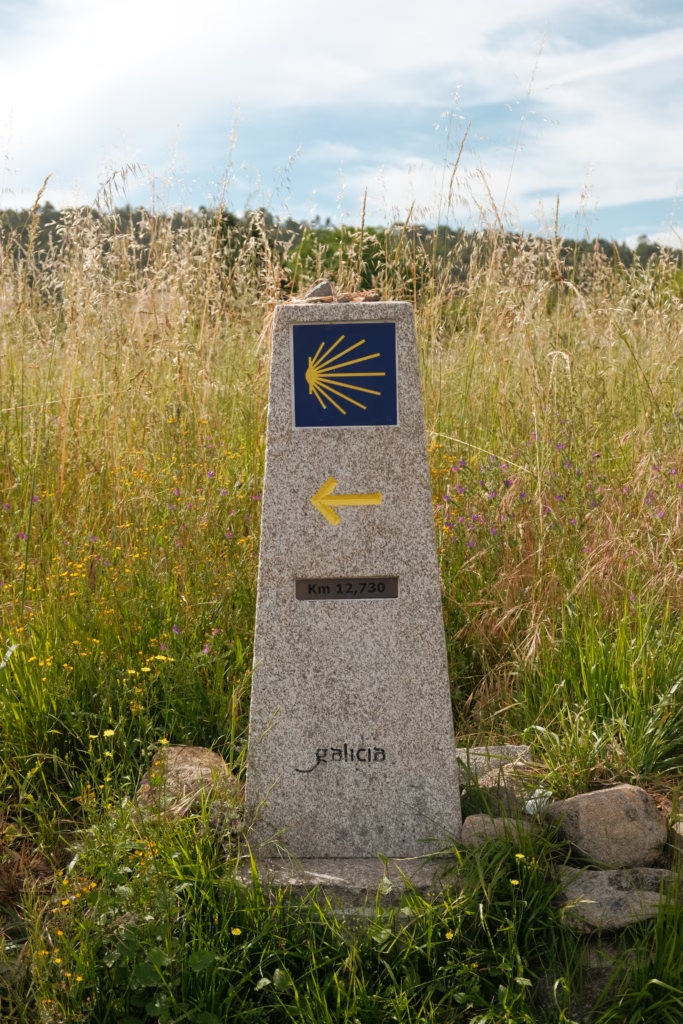
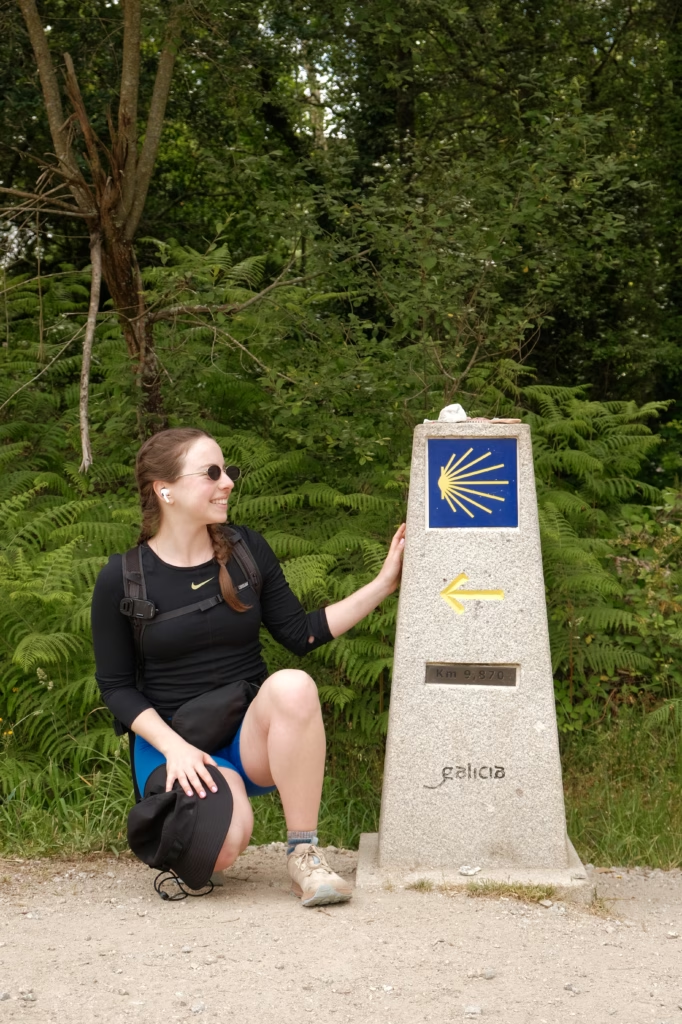
We left Hotel Atlantico in Vigo at around 9 AM and officially began our Camino. We quickly found our first trail marker that read 102 km, the total distance we’d be walking to Santiago
To be honest, the walk out of Vigo is not the most scenic section of the route. You’re walking through the city, navigating traffic and climbing steadily uphill. However, the higher you climb, the better the views become. Looking back over the coastline and the Vigo estuary was absolutely beautiful.
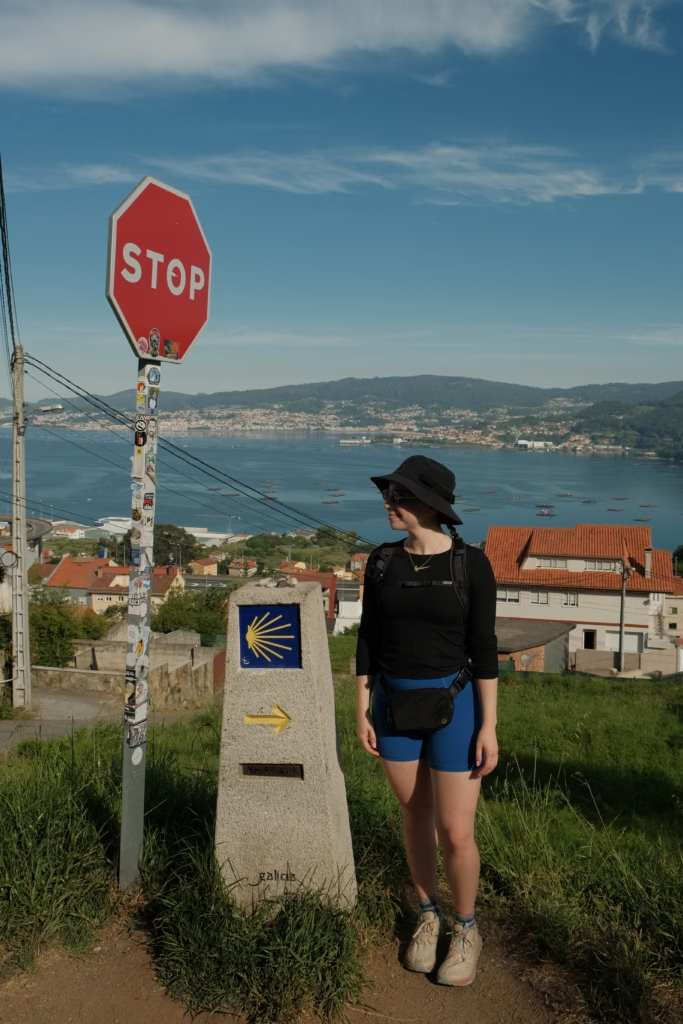
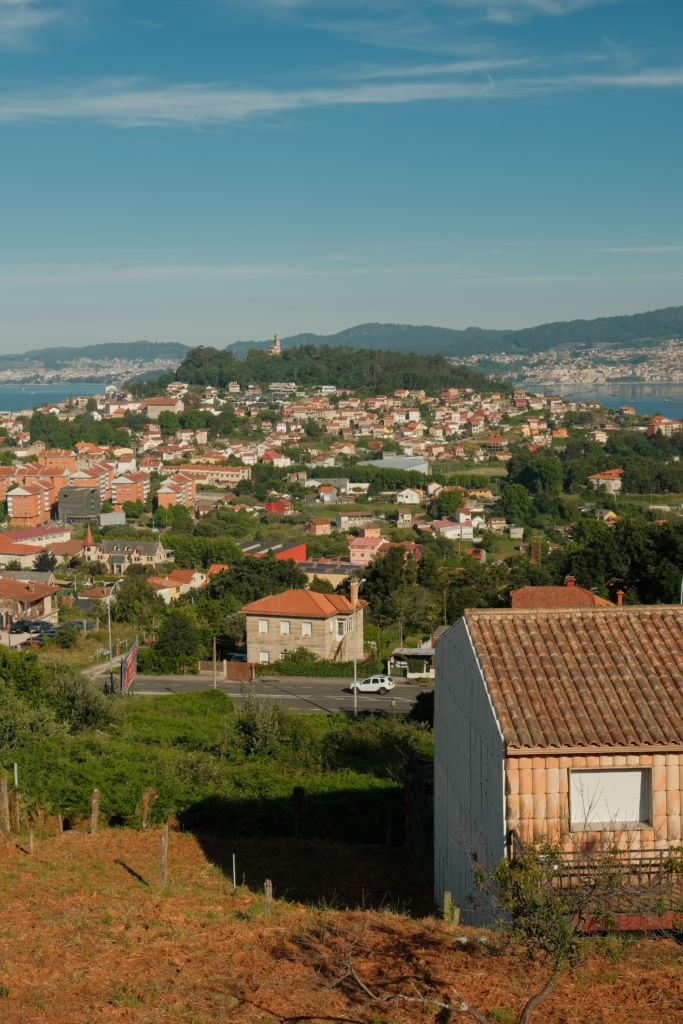
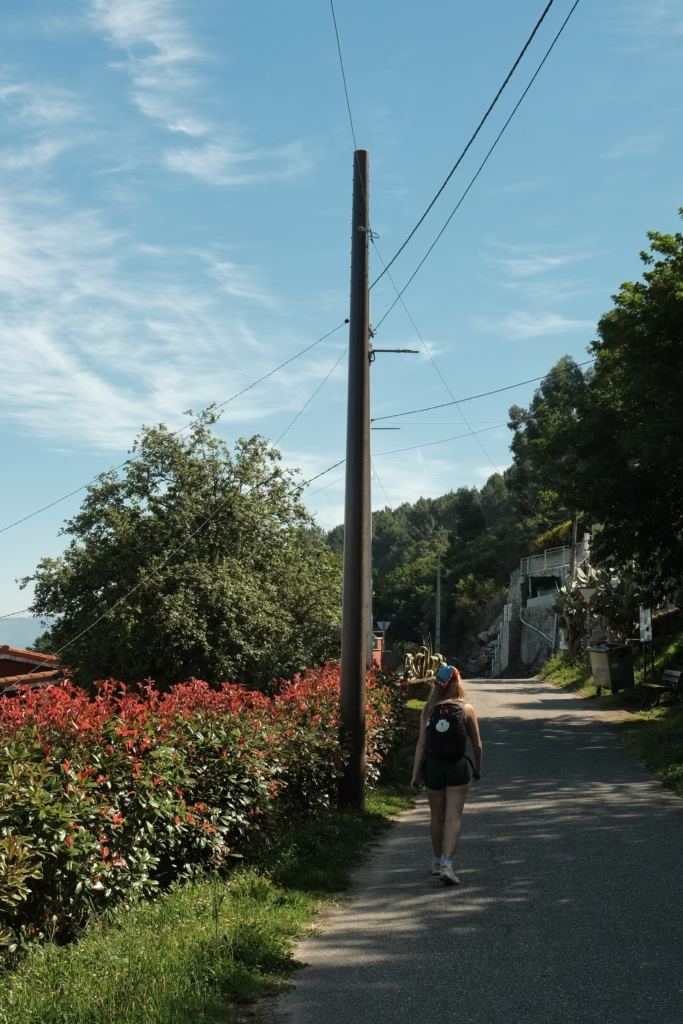
Eventually, the city fades away and you’re rewarded with wooded trails and some shade. That being said, much of the route to Redondela is exposed to the sun, so don’t forget sunscreen and plenty of water.
Once entering the woods, we found our first wax stamp, something that has become popular along the Camino in recent years (I didn’t find any 2 years ago). It ended up being our favorite wax stamp that we got, and the only one without a line. So if you find this one on your way from Vigo to Redondela definitely stop.
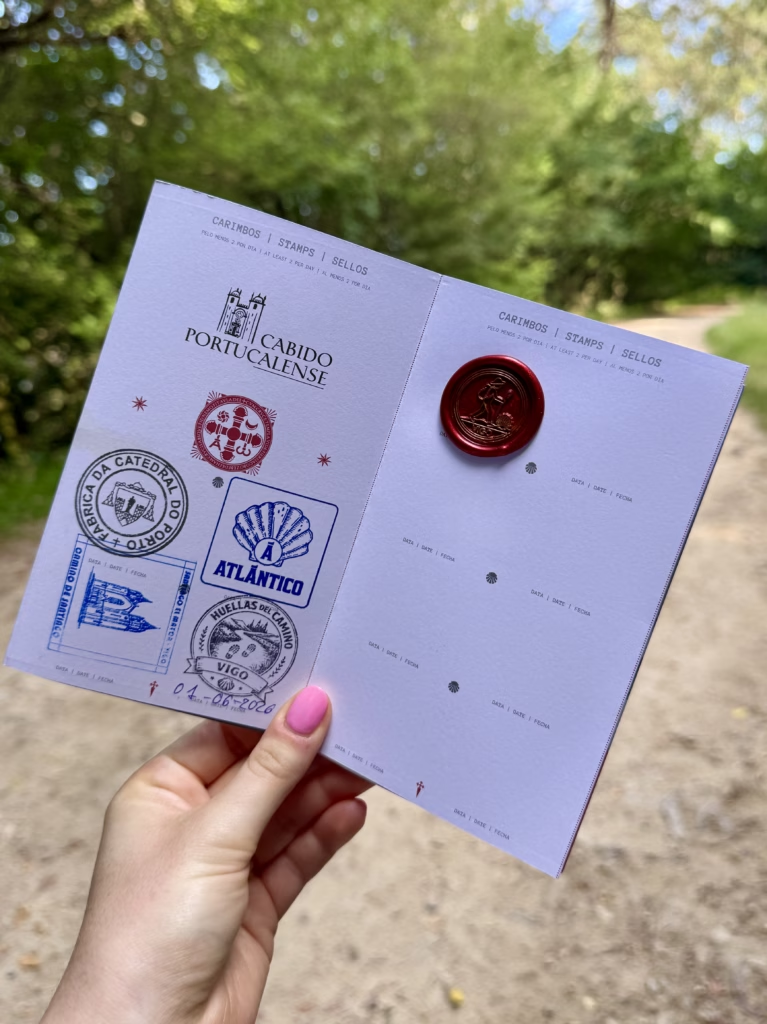
We arrived in Redondela around 12:30 PM and stopped for lunch at Papagaio. I actually ate here on my first Camino two years earlier and remembered it being good. Their menu has a little of everything, including yummy vegan options.
Most people stop in Redondela for this stage, but we booked a unique homestay about 5 km past Redondela in Souxuste. So after lunch, we set off at around 1:30 pm and walked the final stretch.
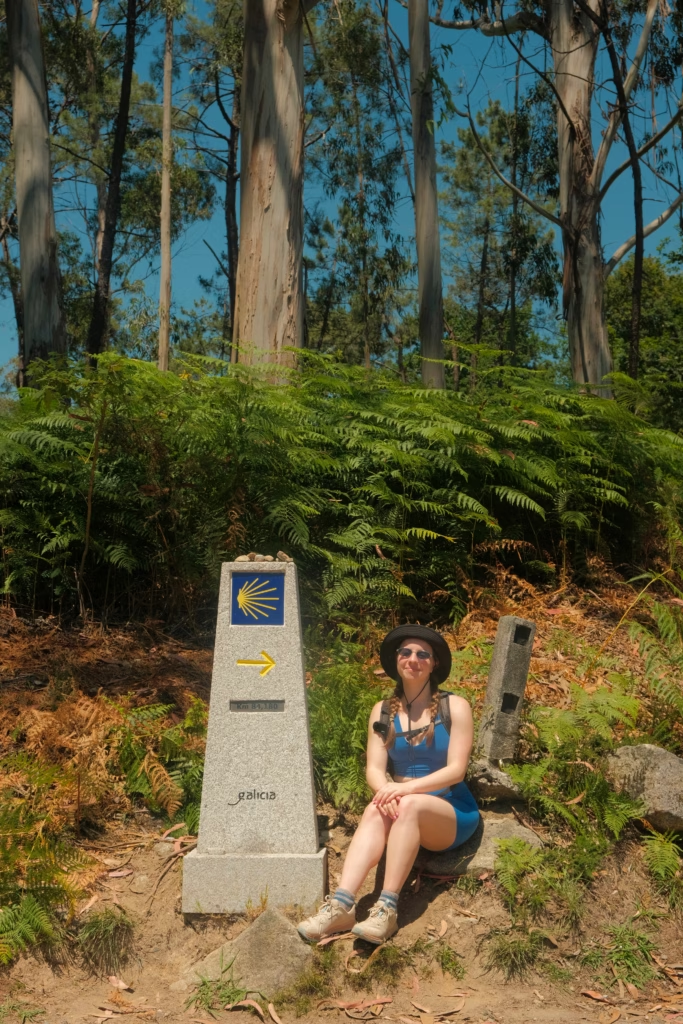
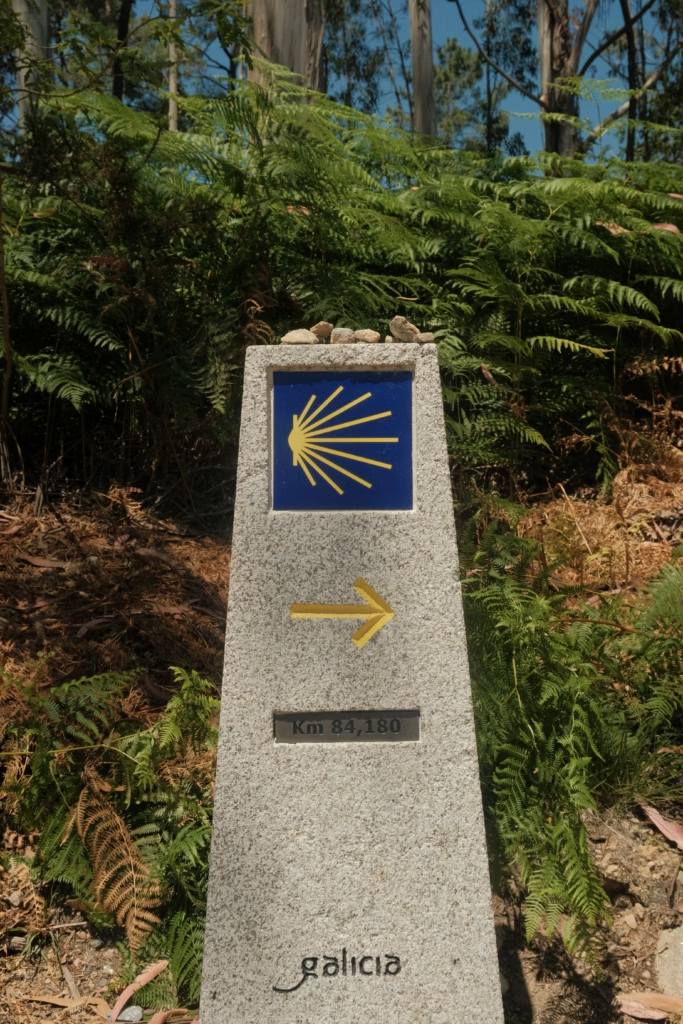
To be honest, those final five kilometers were tough. It was the hottest part of the day, there was very little shade. My legs were definitely starting to feel the long distance. We arrived at our accommodation around 3:15 PM, tired but happy to have completed our first day.
Where We Stayed in Souxuste
We stayed at Casa D’Mina in the tiny village of Souxuste, about 5 km past Redondela. It ended up being my favorite accommodation of the entire Camino, because it felt like it’s in the middle of nowhere. When we booked it, I was slightly concerned about where we would get dinner since the closest restaurant is a few kilometers away.
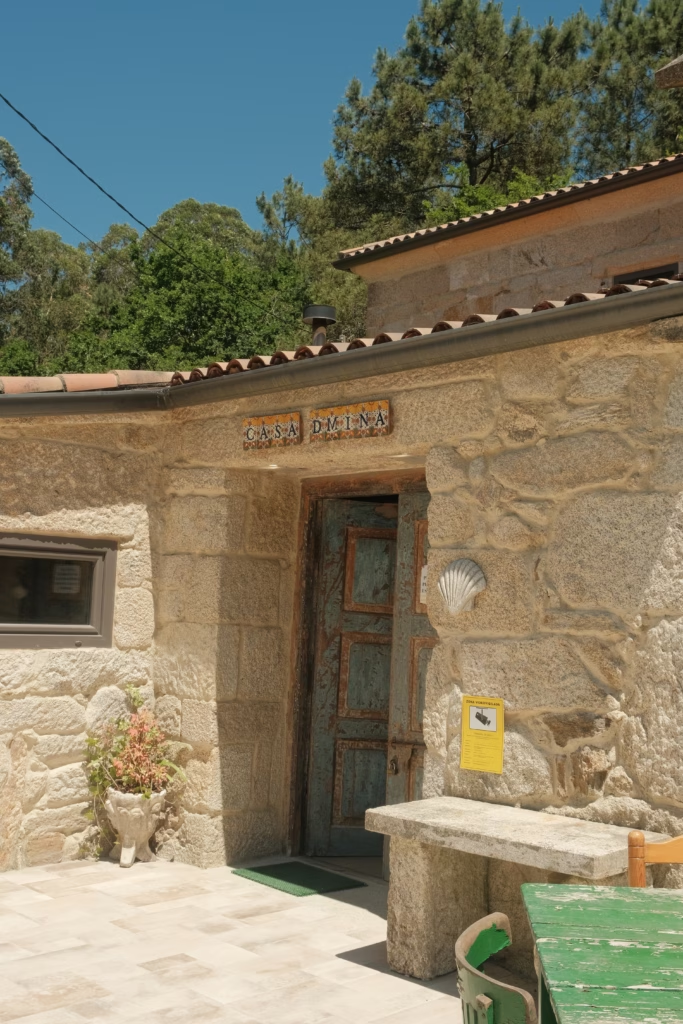
Thankfully, the host has thought of everything. The kitchen is stocked with snacks, drinks, breakfast items, and small meals available for purchase. There was wine, beer, soda, cheese, meat, rice balls, egg bites, yogurt, toast, and more. For dinner, guests can also order pizza from a nearby restaurant.
We spent our afternoon there in the lovely outdoor garden, doing some crafts we had brought and drinking wine. While this was one of the most expensive places we stayed during the Camino (excluding Santiago), it was absolutely worth it for the experience.
Price: €89
Rating: 10/10
Book your stay at Casa D’Mina here.
Day 2: Souxuste to Pontevedra (15.7 km)
After a nice breakfast at Casa D’Mina, we set off around 8 AM feeling refreshed and excited for a shorter day.
The first few kilometers were some of my favorite of the entire Camino. Much of the route winds through forests before opening up to incredible views of the water below. Because the scenery was so beautiful, we found ourselves stopping constantly to take photos and admire the view.
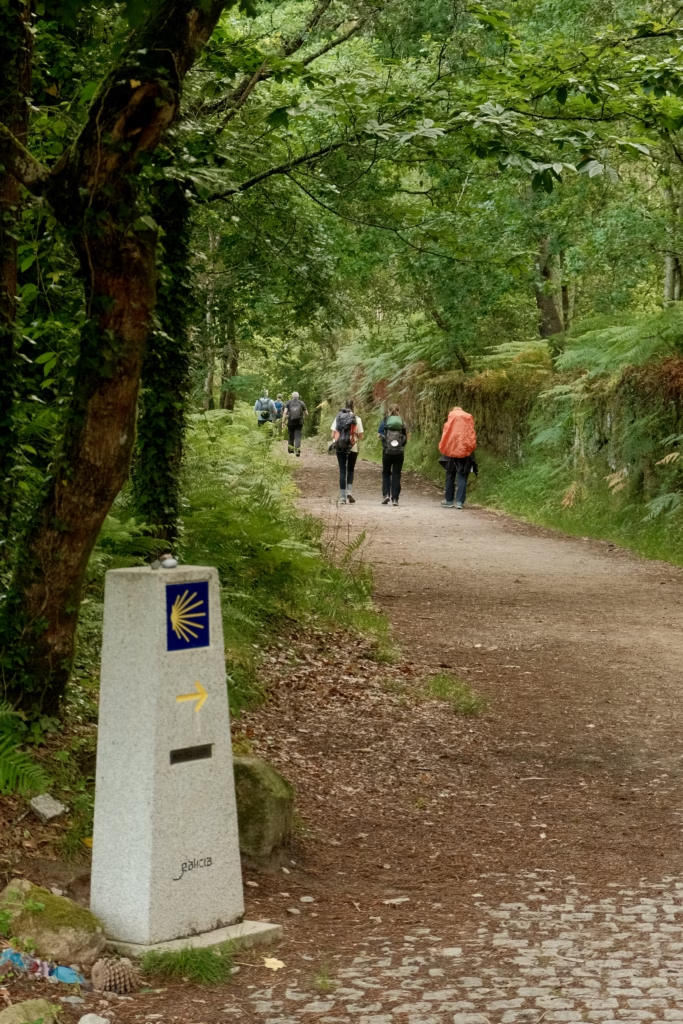
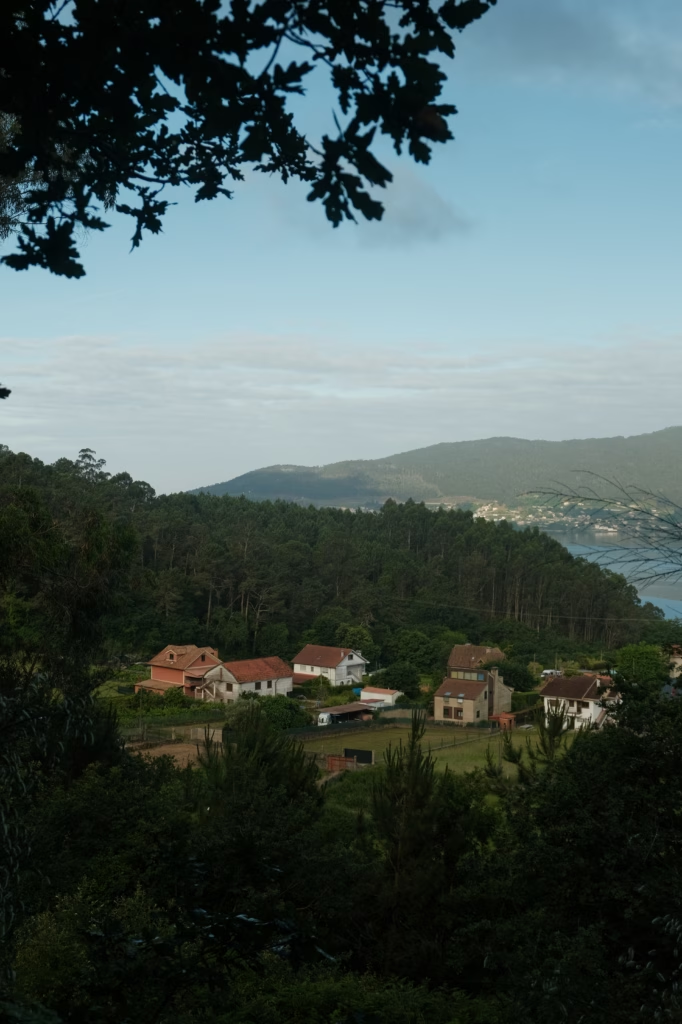
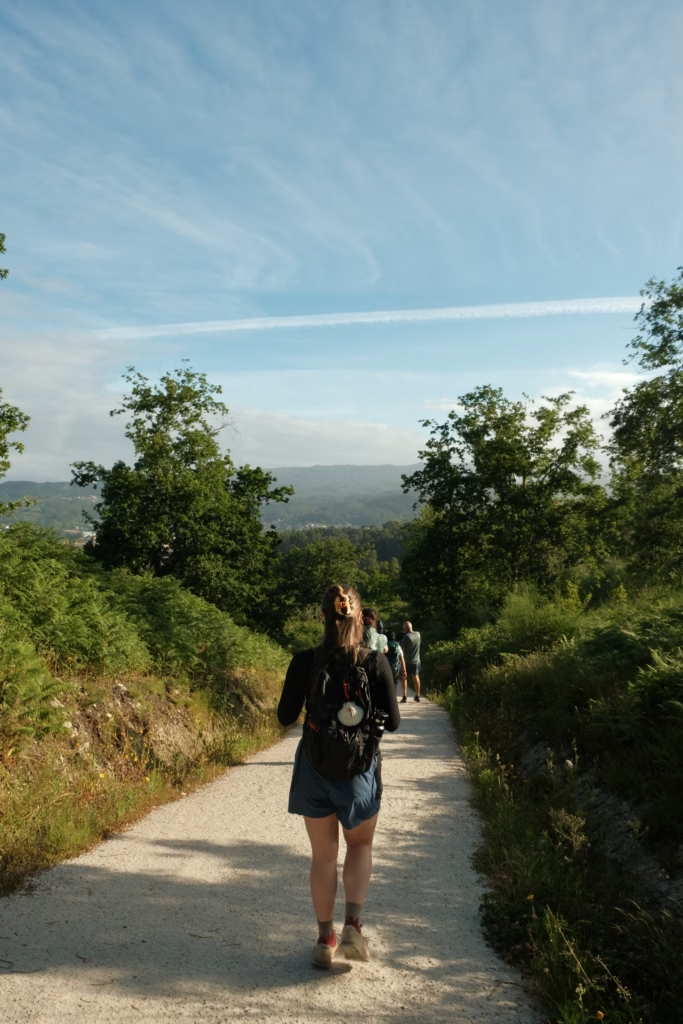
We made our way into the town of Arcade and stopped at A Filla do Mar for a quick snack before continuing on.
The route then passes through several small towns, where we found horses, someone selling cherries, and this stop sign that was a good reminder.
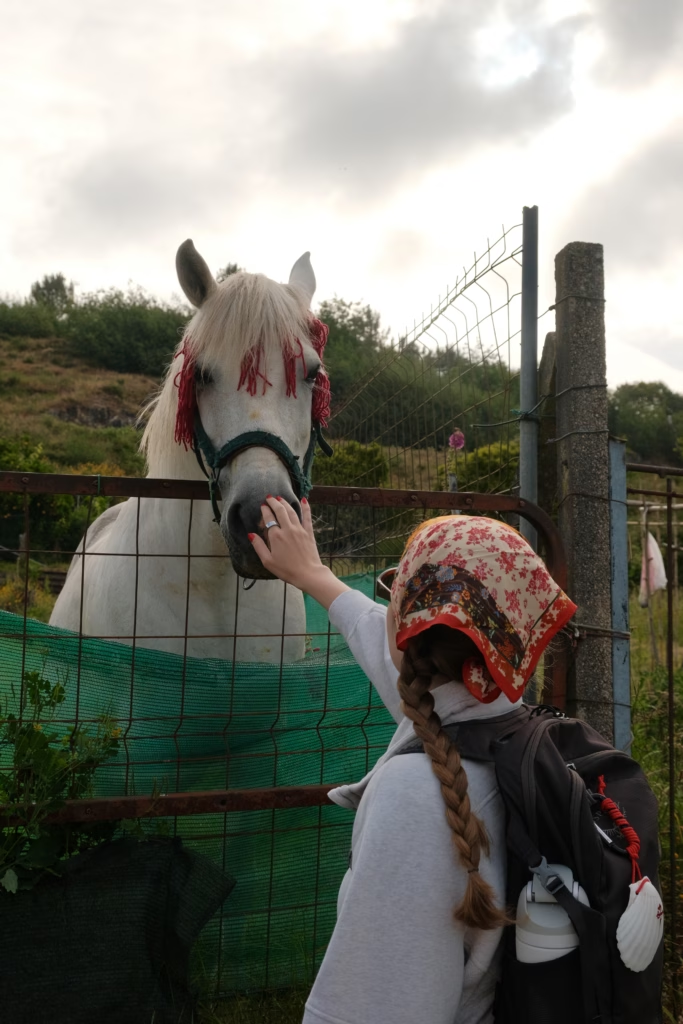
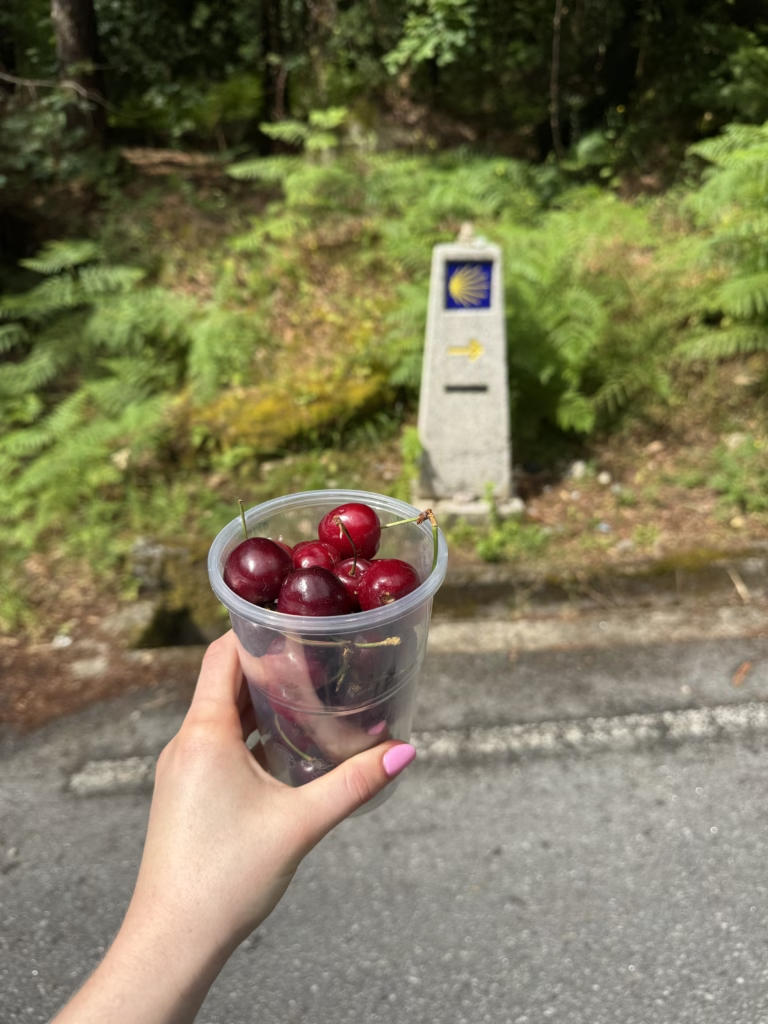
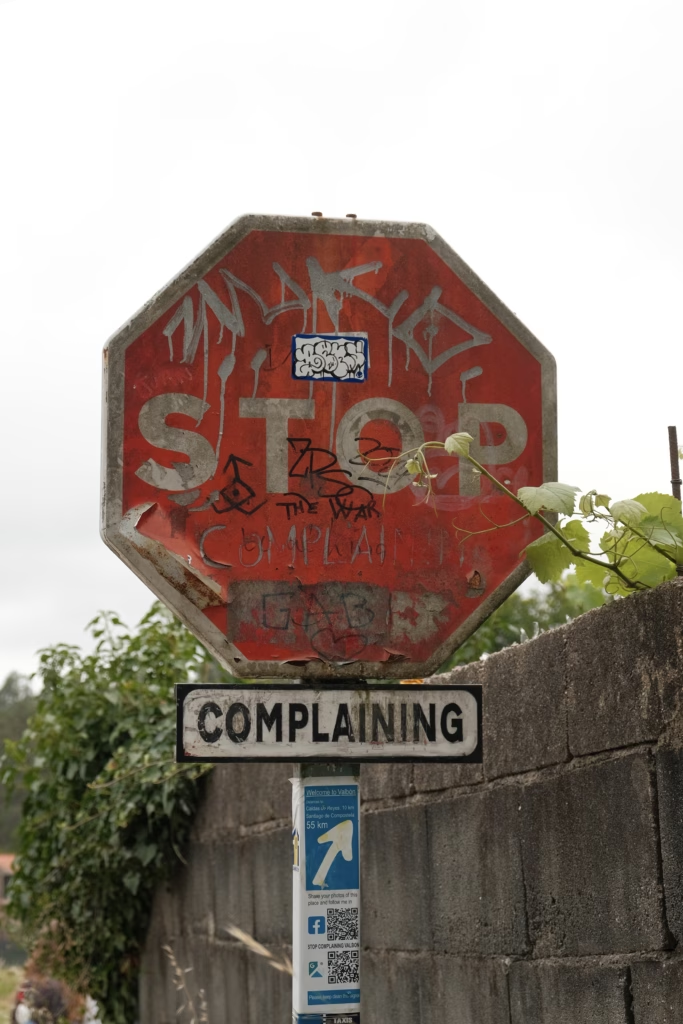
Entually we made it to a point with two conflicting trail markers, one pointing to the official route and the other pointing to a “complementario” route. The official route is more direct and follows the road, but you’d be walking next to traffic in the direct sun. We opted for the “complementario” route that is a forested trail.
The trail follows a river and winds back and forth through the woods. It was peaceful and shaded, but much longer than I expected. By this point in the day, both of us were moving slower than usual. Even though this was a shorter stage than Day 1, it somehow felt longer. I think our legs were still recovering from the previous day’s walk.
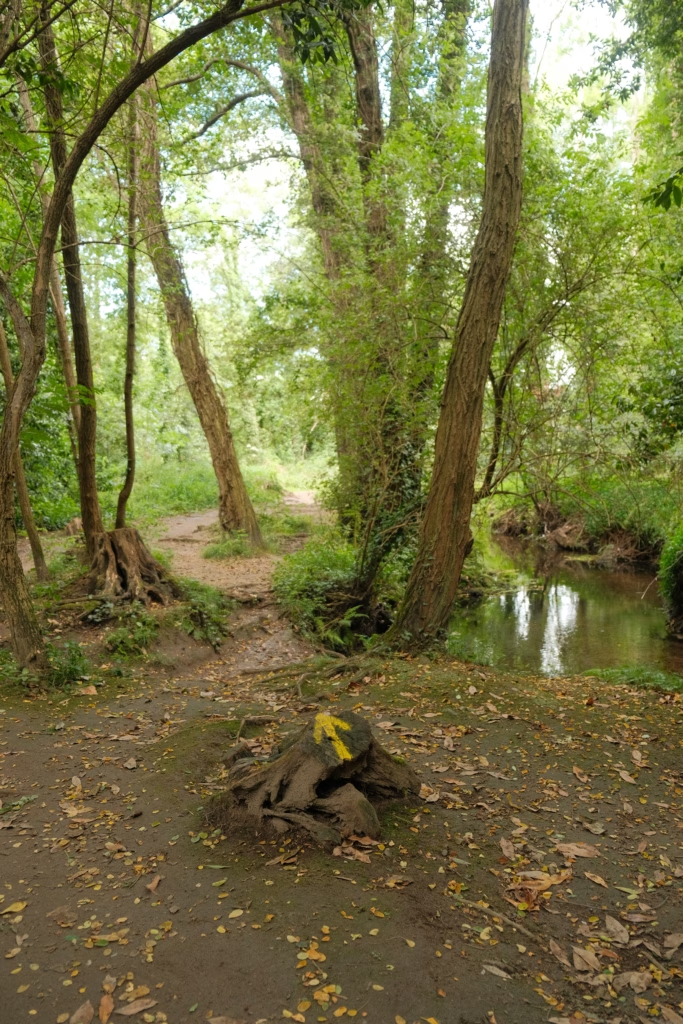
Eventually, we emerged from the forest and only had a few kilometers left before reaching Pontevedra around 1:30 PM.
Our first stop was lunch at Il Piccolo, where we enjoyed a big Italian meal that felt very well deserved after the morning’s walk.
After checking into our accommodation and showering, we spent the afternoon exploring Pontevedra. Compared to most towns along this part of the Camino, Pontevedra feels like a real city. If you’ve forgotten anything for your Camino or need to buy clothes, electronics, or other supplies, this is the place to do it. It has every type of store you could need.
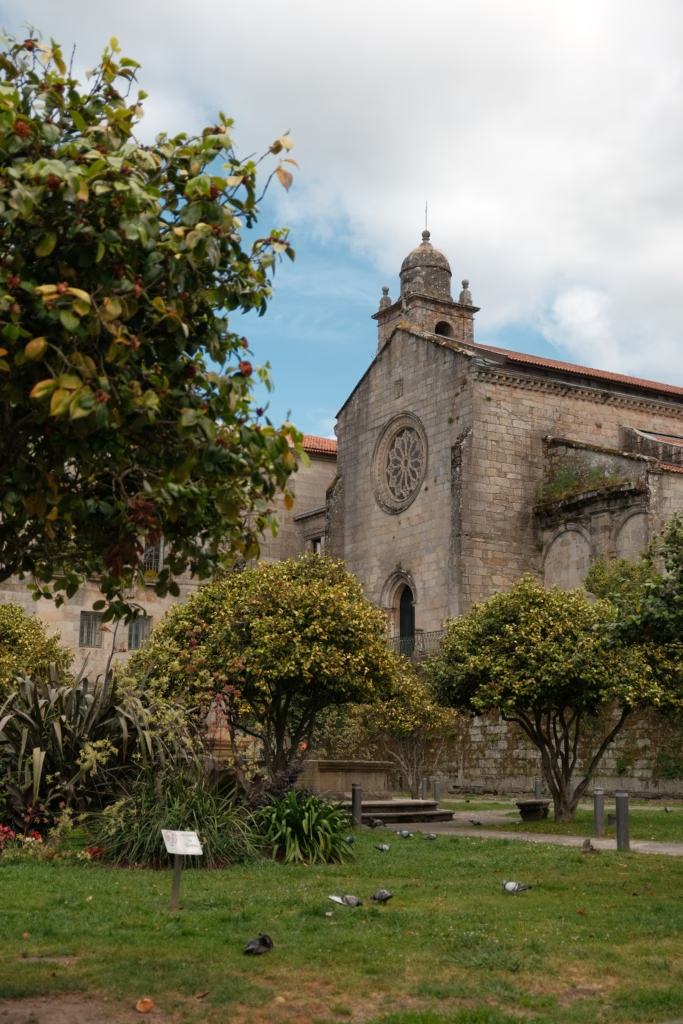
Where We Stayed in Pontevedra
Acola Rooms was simple but comfortable and had everything we needed for one night.
The room itself was basic, but there was a nice common area with a fridge and coffee maker. While there wasn’t a full kitchen, it was still a great setup for Camino pilgrims.
Price: €66
Rating: 9/10
Book your stay at Acola Rooms here.
Day 3: Pontevedra to Caldas de Reis (21.3 km)
Day 3 was one of our longer days, so we tried to get an early start, leaving our hotel at around 8 AM. After crossing the bridge out of Pontevedra, we stopped at a small café for breakfast. We ordered coffee and tortilla de patatas, which was the perfect fuel for the morning ahead.
The weather was completely different from the first two days. Instead of sunshine, we were greeted by cloudy skies. Thankfully, it never actually rained, and after two hot, sunny days of walking, neither of us minded the cooler temperatures.
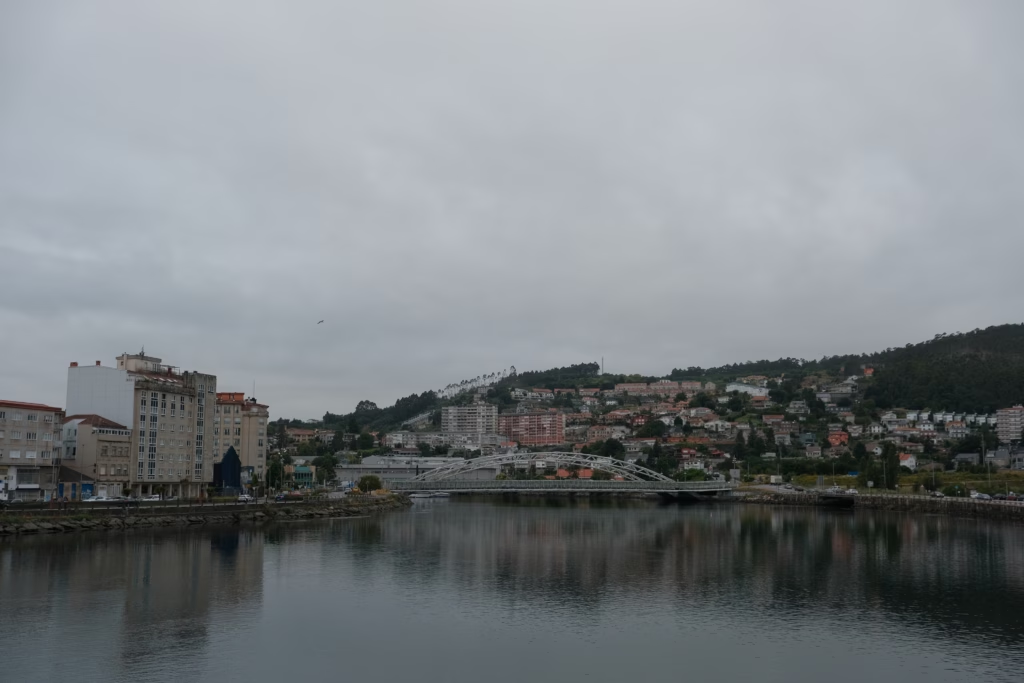
This day also happened to be my friend Marcy’s birthday. The night before, I had bought her a birthday button to wear on her backpack next to her shell, so everyone on the Camino would know it was her special day. At one point, a group of pilgrims noticed the button and sang Happy Birthday to her. It was such a special moment!
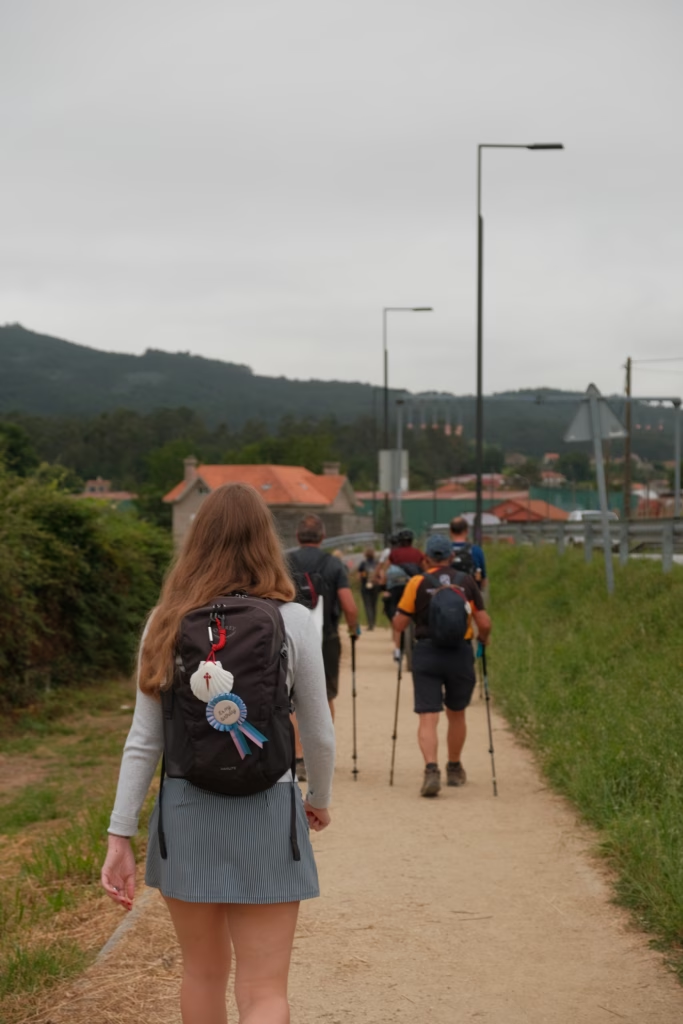
A few hours into the walk, we stopped at a café, a Pousada do Peregrino, for orange juice and a tostada. There was a long line for food, and an even longer line for the bathroom, which was a recurring theme throughout this Camino. We were there for about 30 minutes before continuing on.
The walk itself wasn’t particularly difficult this day, with no major climbs. However, I did find this section a little monotonous at times. Much of the day was spent walking through forests, vineyards, and farmland. Occasionally the route followed roads or passed railroad tracks, but for the most part it felt very similar mile after mile.
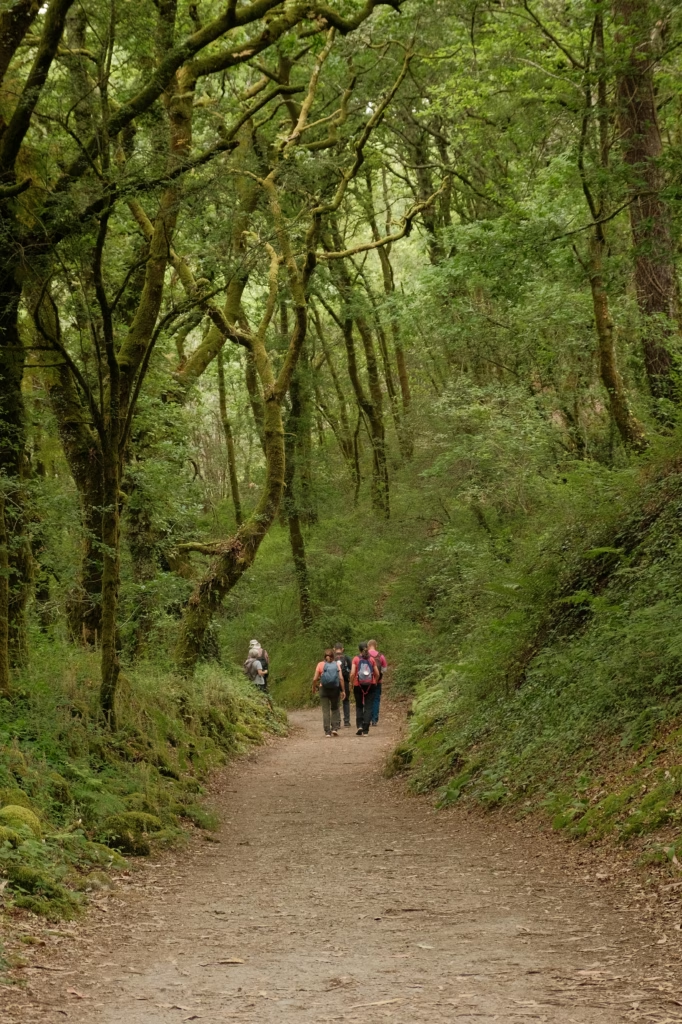
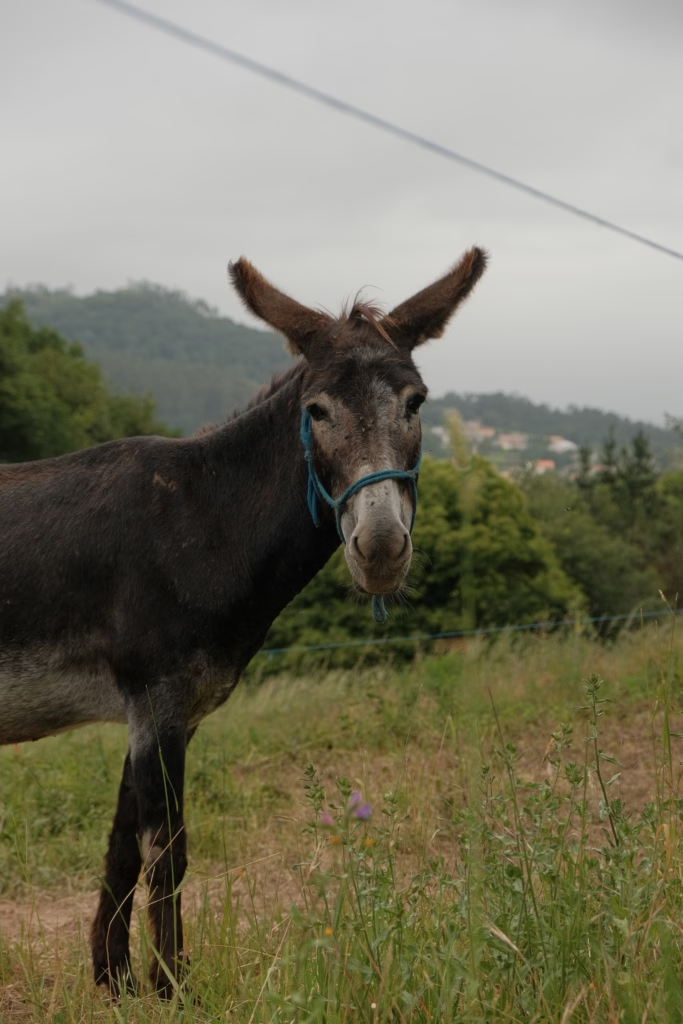
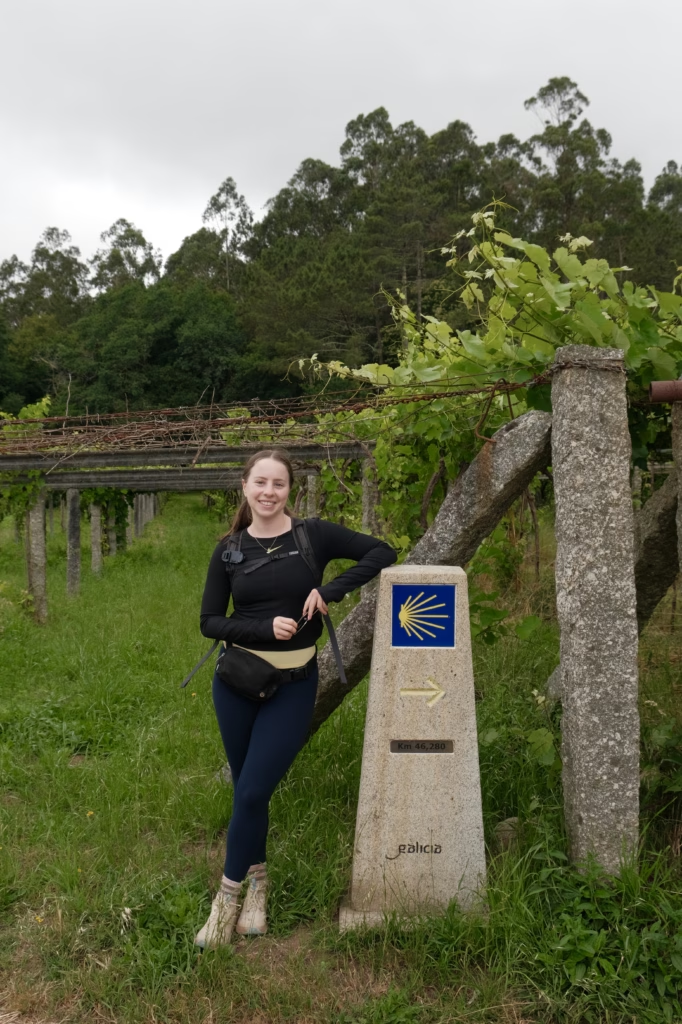
As the day went on, we tried to push all the way through to Caldas de Reis without another stop, but eventually gave in about 3 kilometers before town. We found a café called Vintecatro and ordered a couple Tinto de Veranos, Marcy’s favorite drink. We took a much-needed break in their lovely outdoor space before completing the final push.
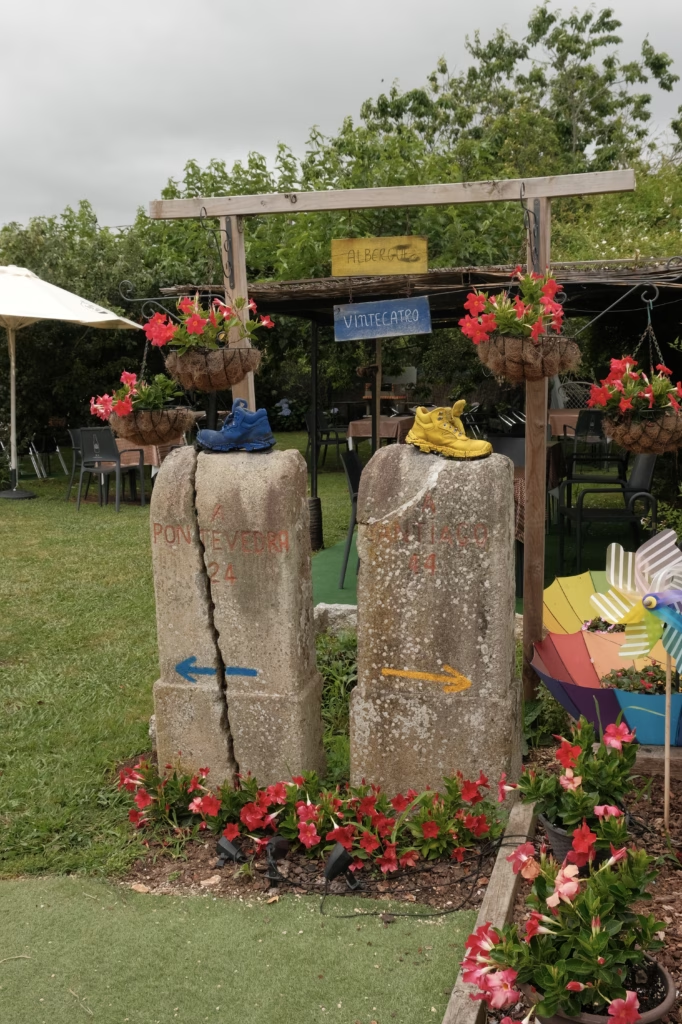
We arrived in Caldas de Reis just before 3 PM and checked into our accommodation for the night. By the time we got there it was drizzling, and it continued to rain lightly the rest of the night.
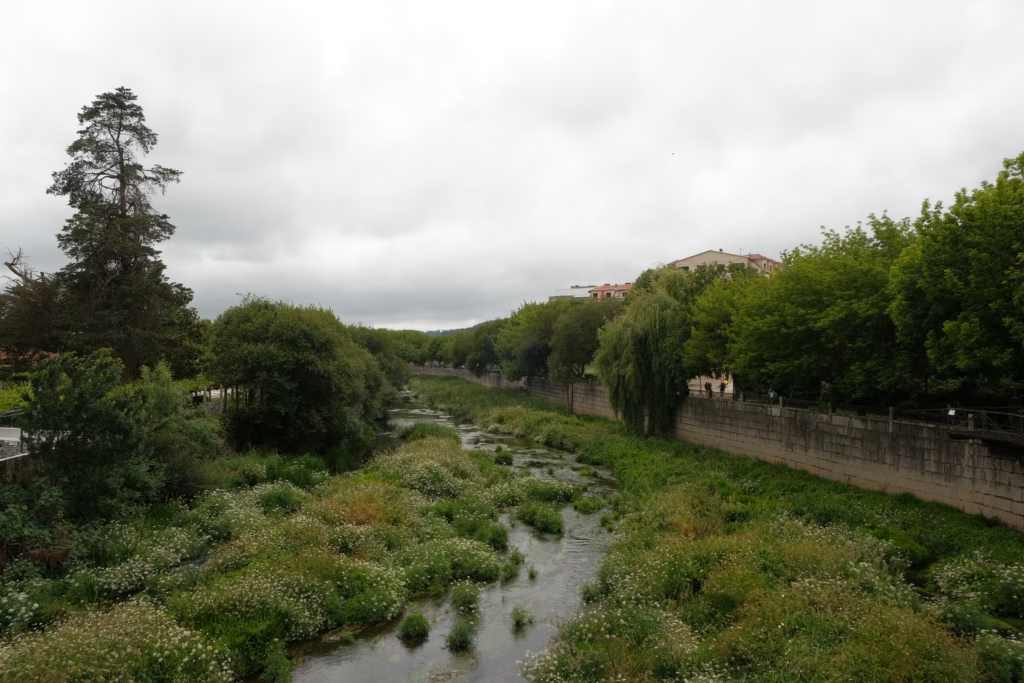
After relaxing for a few hours, we headed out to find dinner. We first went to Agave, a highly rated restaurant, but unfortunately there weren’t many vegetarian options there for me. So Marcy ate while I just had a glass of wine. Then we walked over to Pizzería Caminato for takeaway pizza, which ended up being one of my favorite meals of the entire Camino. I would absolutely recommend it if you’re spending the night in Caldas de Reis.
Where We Stayed in Caldas de Reis
In Caldas de Reis we stayed at Pension Villa Mayer. If you’re unfamiliar with pensiones in Spain, they are usually shared apartments, where guests have private rooms, while bathrooms, kitchens, and other common areas are shared.
Our room overlooked the Camino and the river, which was nice. We shared a bathroom with only one other room and also had access to a kitchen and washing machine.
It wasn’t the most luxurious place we stayed, but it was comfortable, affordable, and had everything we needed.
Price: €53
Rating: 8/10
Book your stay at Pension Villa Mayer here.
Want to stay connected during your Camino?
As a solo traveler, staying connected to the internet while traveling is one of my biggest priorities. Especially on the Camino, I want to be able to find my way if I get lost or be able to deal with emergencies if necessary. I don’t like to depend on finding wifi, so I always buy eSIMs when traveling internationally. It’s a lot easier than having to buy a physical SIM card, which aren’t compatible with most phones these days.
I use the app Airalo, where you can download eSIMs for 200+ countries. My biggest tip – download and activate the eSIM before you board your flight, so you’ll have internet as soon as you arrive.
Day 4: Caldas de Reis to Padrón (17.8 km)
After three days of clear weather, we finally woke up to rain. Because of this, we decided to have a later start this morning to wait for the rain to pass.
We left our accommodation around 9:30 AM, and as soon as we stepped outside, we were greeted by pouring rain, so we immediately decided to stop for breakfast and wait it out some more.
We found a restaurant attached to a fancy hotel in Caldas de Reis, Pousada Real Hotel, and settled in for a leisurely breakfast. I ordered scrambled eggs on toast, which is surprisingly difficult to find in Spain and happens to be my preferred breakfast. So I was a very happy pilgrim.
By the time we finished eating around 10:30 AM, the heavy rain had stopped. The rest of the morning alternated between light drizzle and cloudy skies, with the sun coming out in the afternoon.
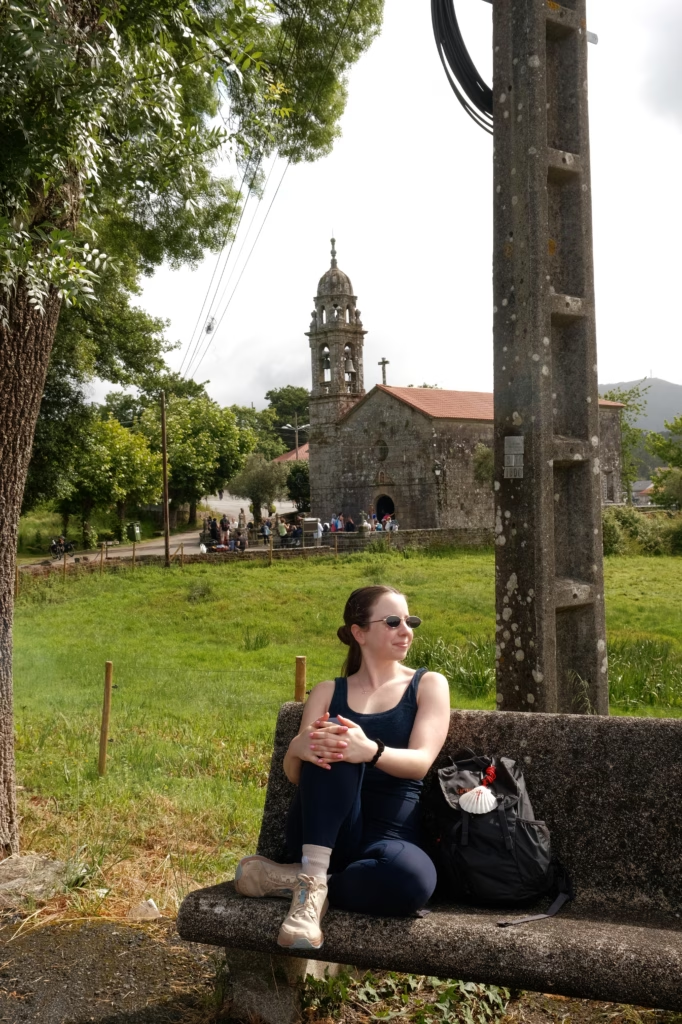
The route itself was similar to previous days, passing through forests, vineyards, and small Galician villages. Not too far into the day, we stopped at a café to buy water and rest for a few minutes. I had hoped to use the bathroom, but the line was so long that I gave up and continued walking.
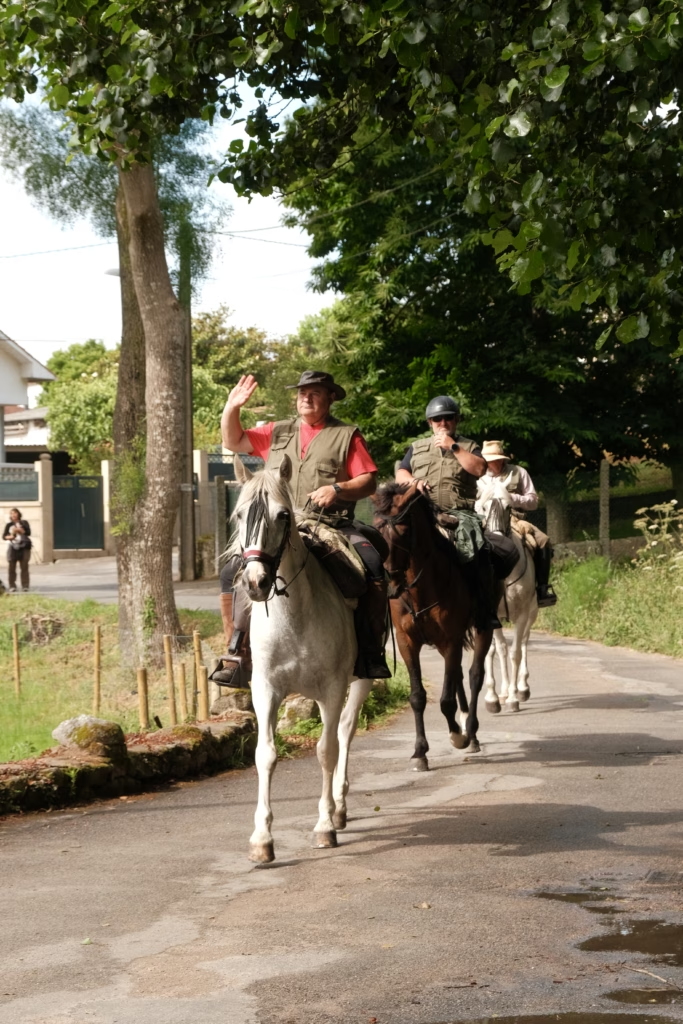
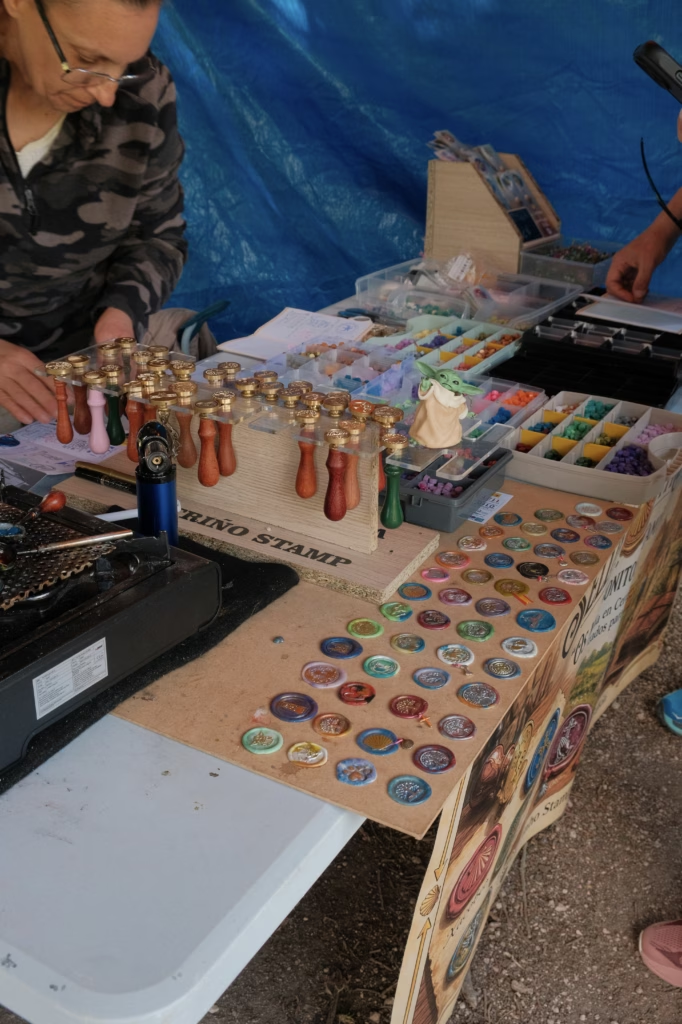
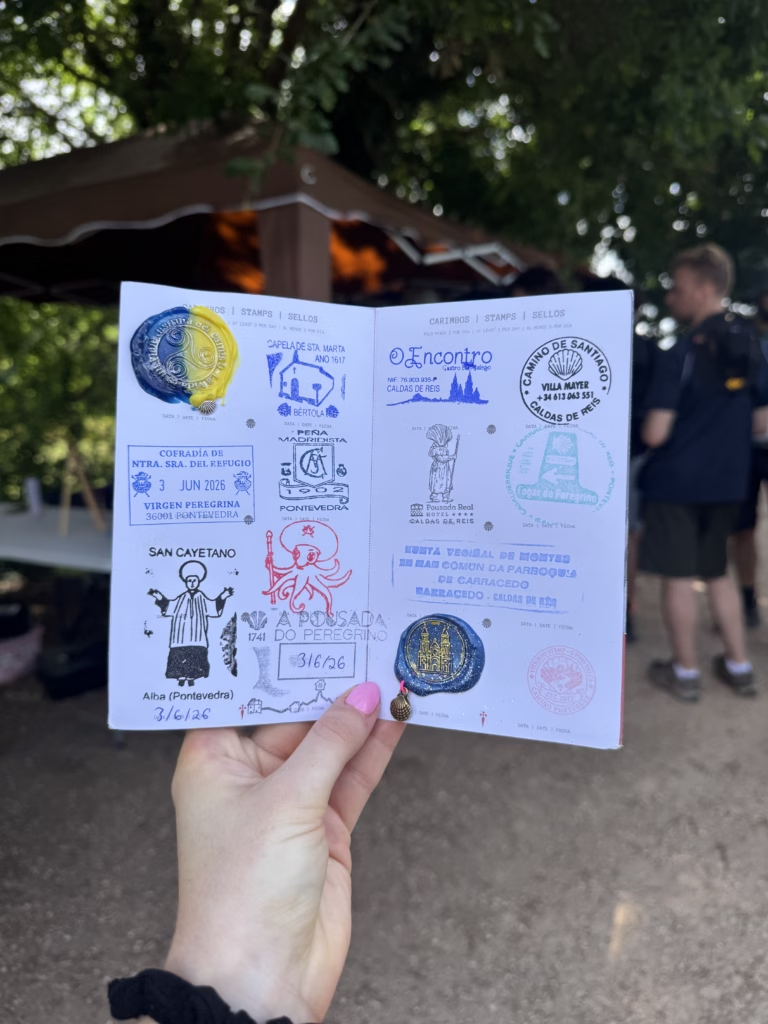
Along the route, we passed a popular wax stamp shop that has apparently become famous on TikTok recently. Pilgrims can customize their own wax seal by choosing the wax color, stamp design, and charm. Each wax stamp costs €2. It looked like a lot of fun, despite the long line, so we decided to stop.
Places like this didn’t exist when I walked the Camino Portugues in 2024. Some locals we talked to explained that wax stamps have been around for sometime on the Frances route, and with the rising popularity of the Portuguès route, people are setting up booths here as well now.
Around 1 PM, we finally arrived at Café Buen Camino in Valga for lunch. I had stopped here during my first Camino and remembered having one of the best meals of the trip: a vegan lentil soup on their pilgrim menu. So I knew I wanted to stop here and try it again.
For just €7, I got a bowl of lentil soup, bread, and wine. It was every bit as good as I remembered.
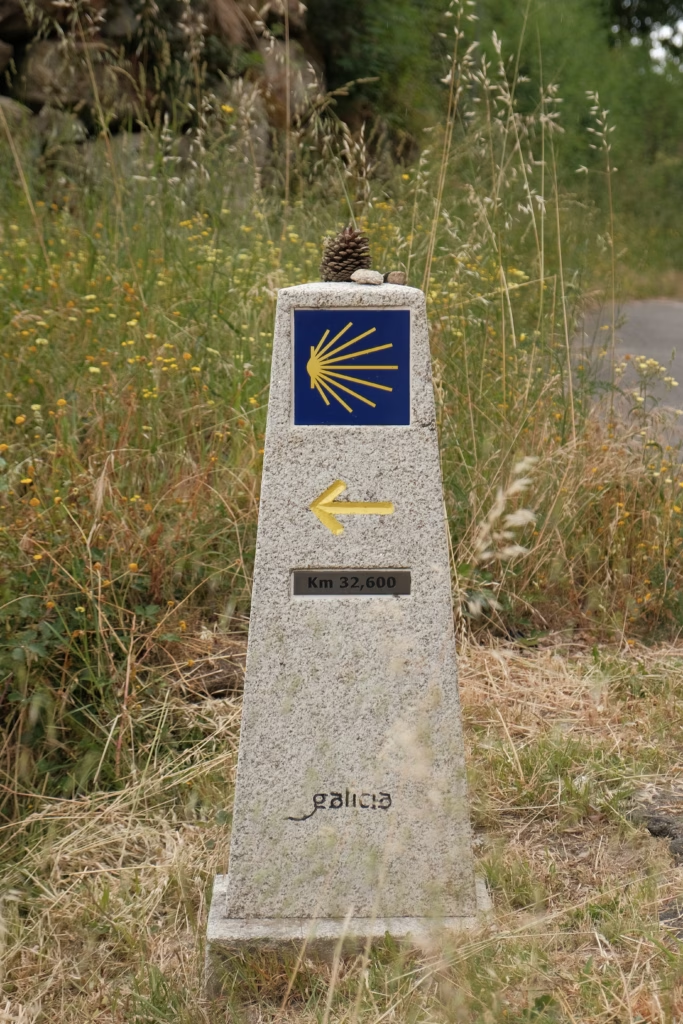
After lunch, we made the final push toward Padrón. As always, the last few kilometers are the hardest. We arrived at our accommodation exhausted and immediately took a 2 hour nap.
That evening, we walked into Padrón and ate at A Cantriña, the town’s Mexican restaurant. We had a great meal and got another really cool wax stamp here.
Where We Stayed in Padron
In Padron we stayed at Albergue do Miega, which to my surprise was actually located about one kilometer before the town of Padron. On the way there, that was great, since it meant we were done with the day earlier than expected. But it also meant adding another kilometer to our long final day into Santiago.
If I had realized this when booking, I probably would have chosen somewhere closer to town. That said, it was a great accommodation, and one of the only ones available when I was booking just a week before.
Albergue do Miega is a traditional private albergue, but it also offers private rooms. Our room was spacious, clean, and felt more like a hotel room than an albergue.
There are a few restaurants nearby, so you don’t necessarily need to walk all the way into Padrón for dinner. We decided to anyway so we could spend some time exploring the town itself.
Price: €84
Rating: 9/10
Book your stay at Albergue do Miega here.
Day 5: Padrón to Santiago de Compostela (26.2 km)
Our final day of the Camino had arrived. At 26.2 kilometers, we knew this would be our longest and most challenging stage, so we woke up early and started walking at around 7:30 AM. We skipped breakfast in Padrón and decided we would stop somewhere along the route instead.
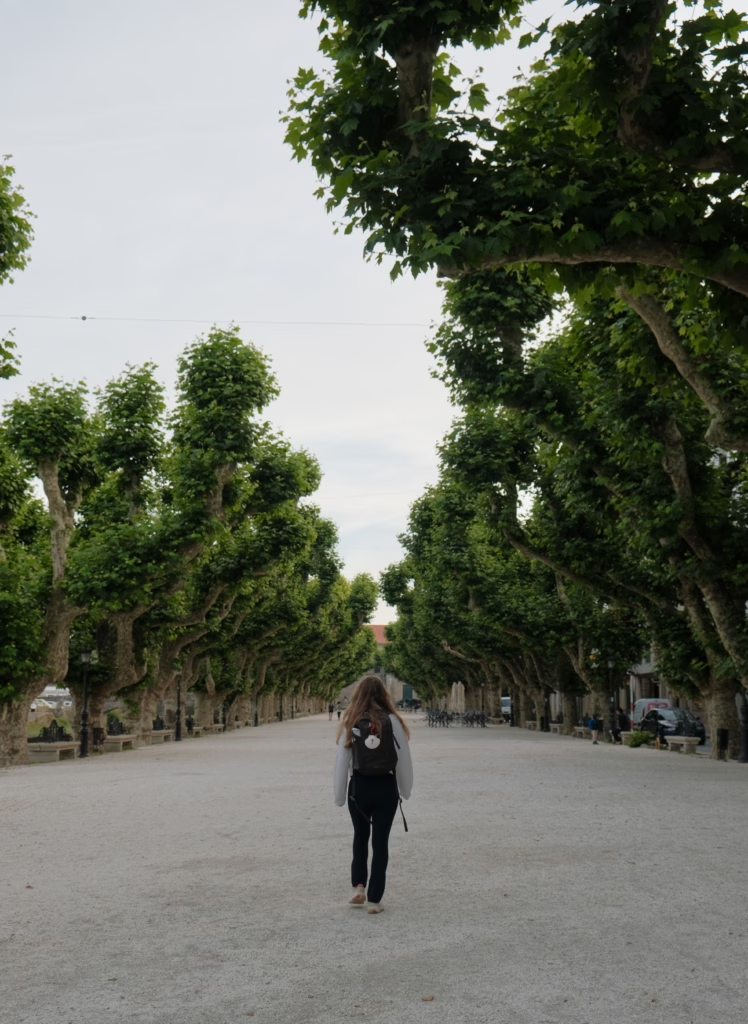
The walk out of Padrón was beautiful. The sun had just risen, and the early morning light made everything feel peaceful and quiet. Despite it being early, there were a lot of other pilgrims out.
Unfortunately, this morning was very cold, at only about 48°F (9°C). After several warm days on the Camino, neither of us had expected to be so cold. I was wearing shorts and my legs were absolutely freezing (I know, my mistake, should’ve checked the temperature).
About five kilometers in, we stopped at a café to eat breakfast and try to warm up. By the time we were done, the sun had come out a bit and it started to warm up, thankfully.
We settled into the rhythm of walking, enjoying our last day and watching the kilometer markers go down and down, until they finally reached single digits. We were so excited to be so close to Santiago!
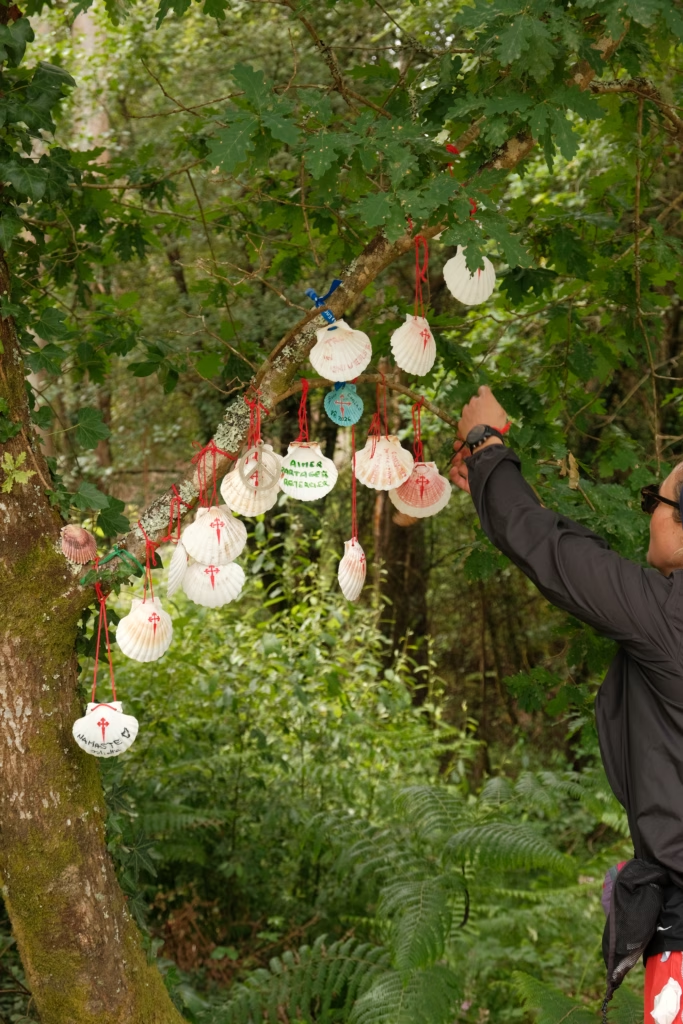
Something I hadn’t noticed on my last Camino were these trees where people hang their shells. I guess it’s a way of “hanging up your hat” as a pilgrim and saying goodbye to the journey. Marcy and I didn’t want to let go of our shells, we wanted to keep them as reminders of our Camino.
We stopped for lunch in Milladoiro, the last major town before Santiago, at a restaurant called O Camiño. We spent about an hour eating, resting, and mentally preparing ourselves for the final stretch.
I was really excited to find this traffic mirror that I had remembered taking a picture at two years before. I tried to recreate the same picture.
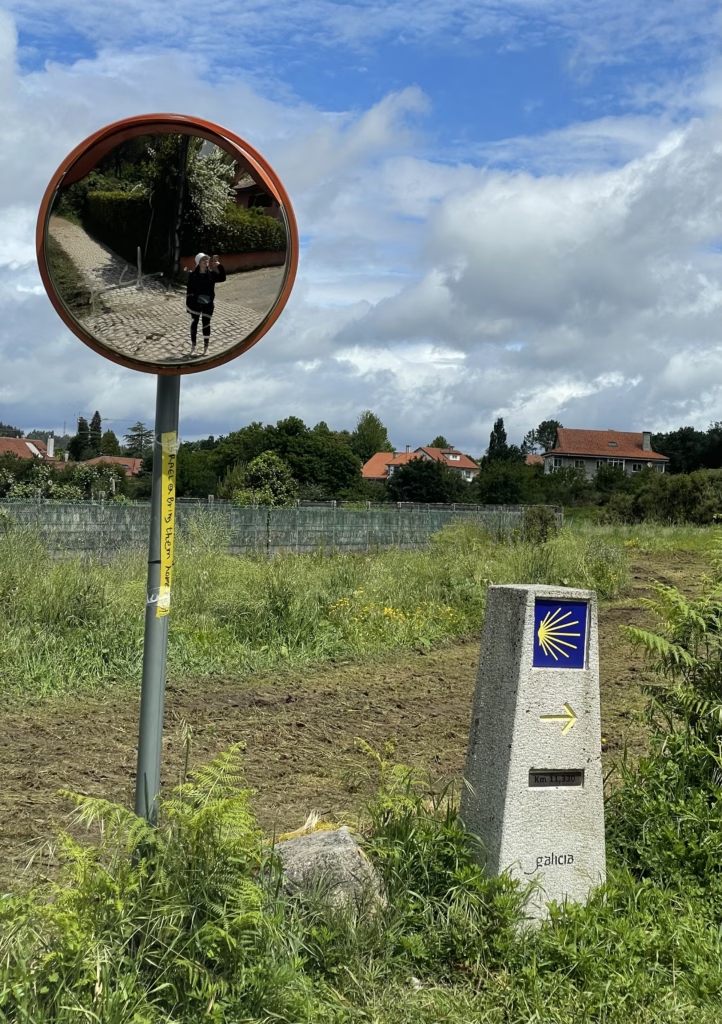
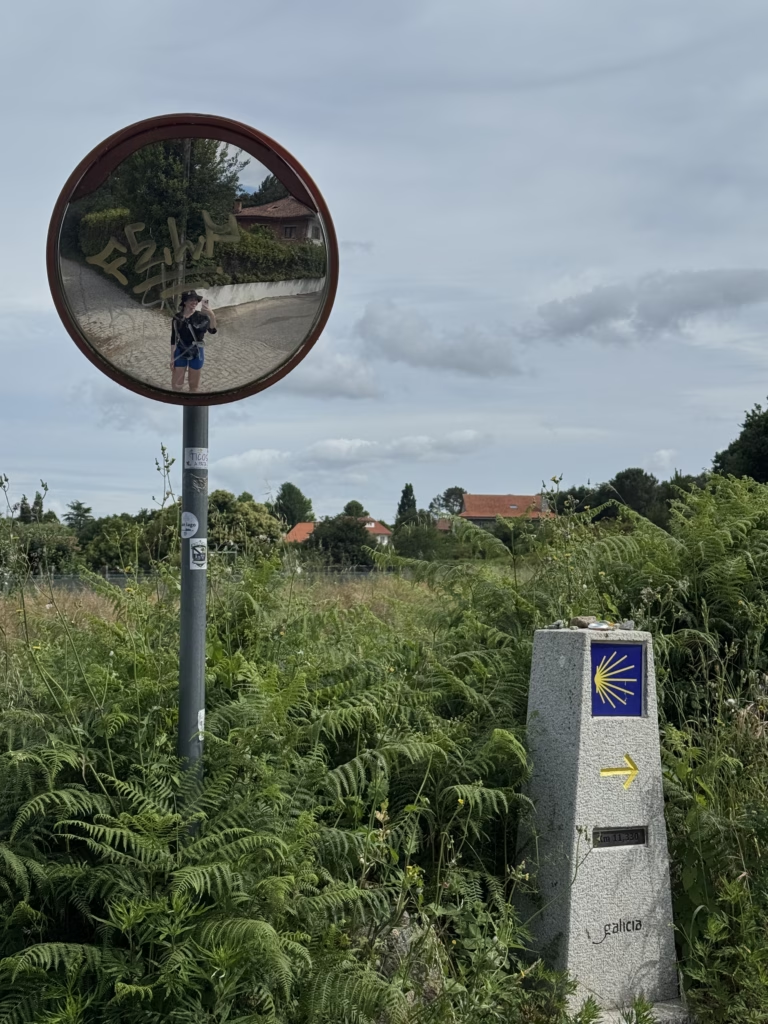
The last 10 kilometers into Santiago are quite hard, which I remembered from my last Camino. There are quite a few uphill sections, and much of the route follows busy roads and highways, which isn’t so pleasant.
Still, the anticipation and excitement kept us moving, and eventually signs of the city began to appear around us. There’s a great spot where you can actually see Santiago’s skyline in the distance, including the Cathedral.
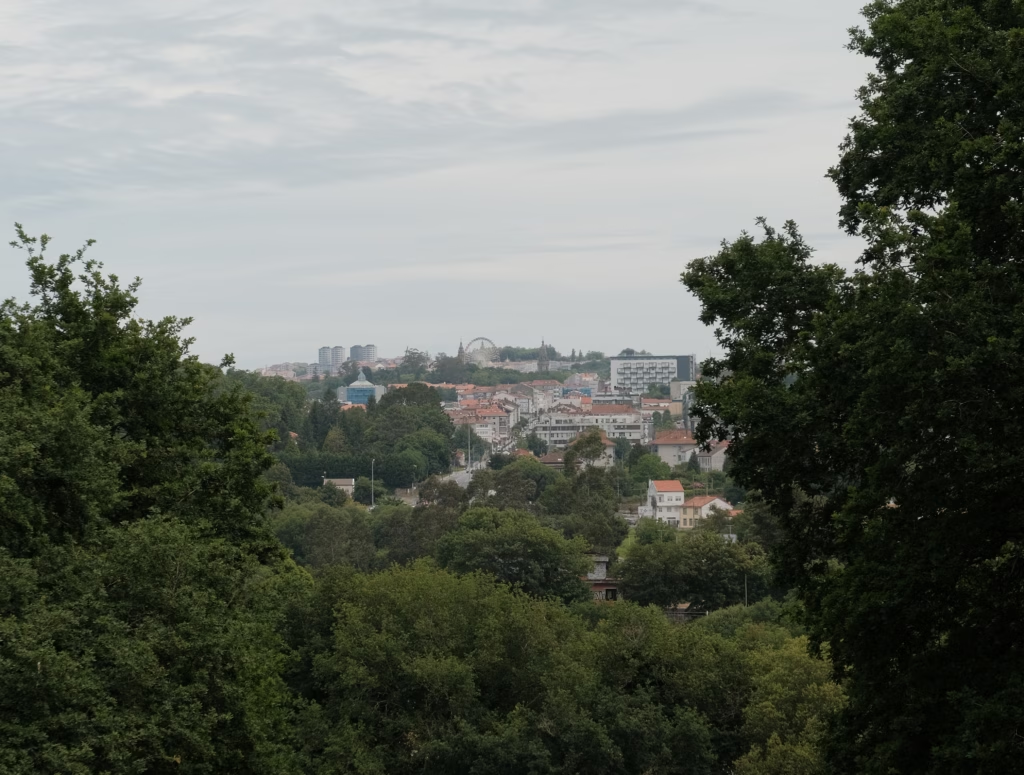
The final stretch winds through the outskirts of the city, as the streets become more urban and crowded, until you really feel like you’re in the middle of a major city. You’ll eventually reach Santiago’s historic center, where the crowds become noticeably larger. Pilgrims, tourists, and locals all fill the narrow streets leading toward the cathedral.
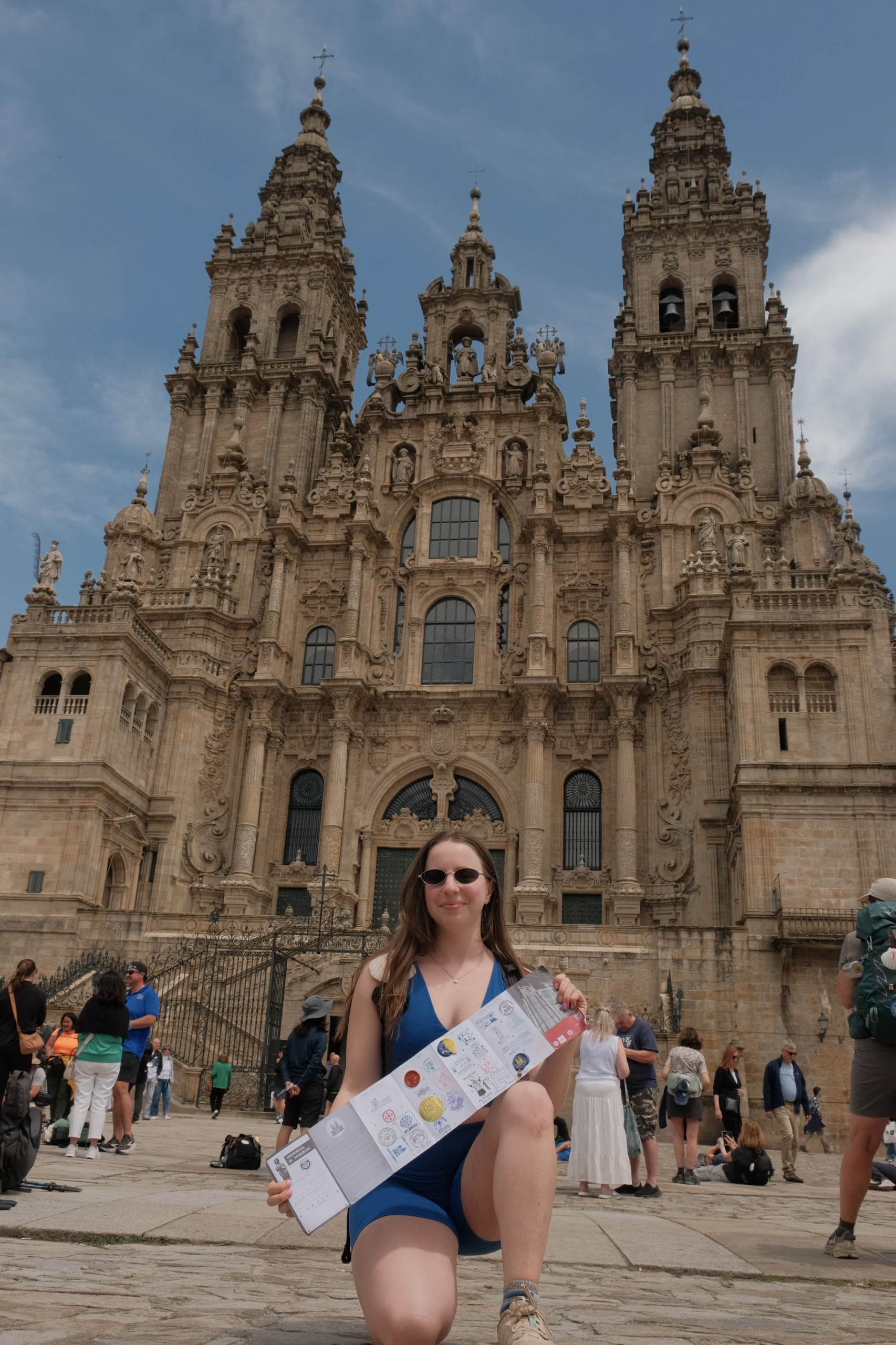
Then suddenly, we were there, rounding the corner into Praza do Obradoiro. We saw the Catedral de Santiago de Compostela standing in front of us, surrounded by hundreds of excited pilgrims who had also completed their Caminos from all corners of Spain.
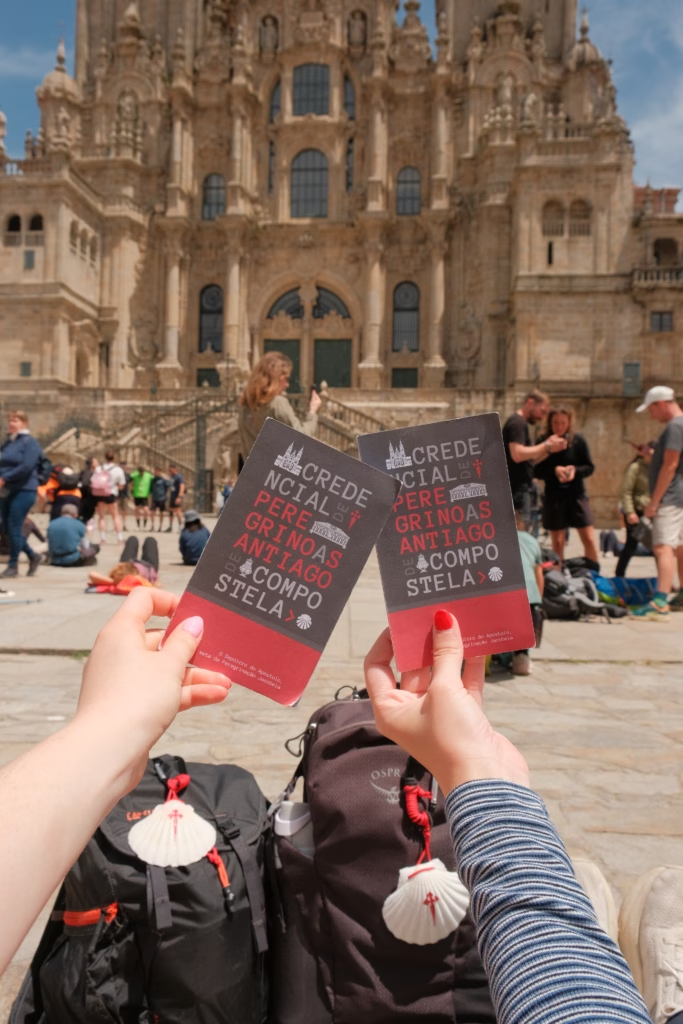
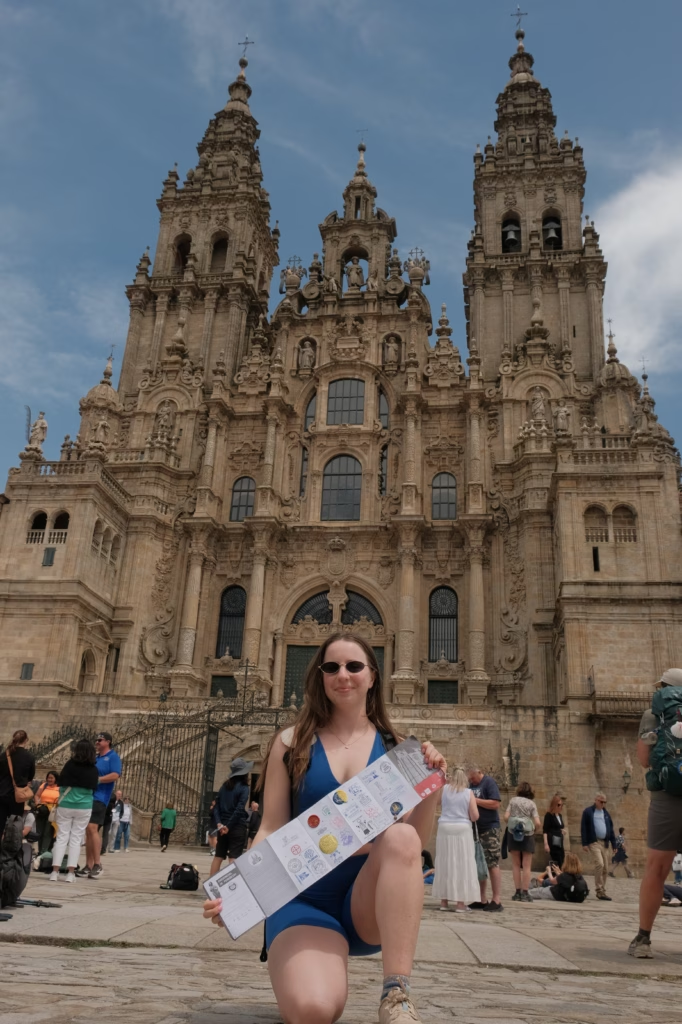
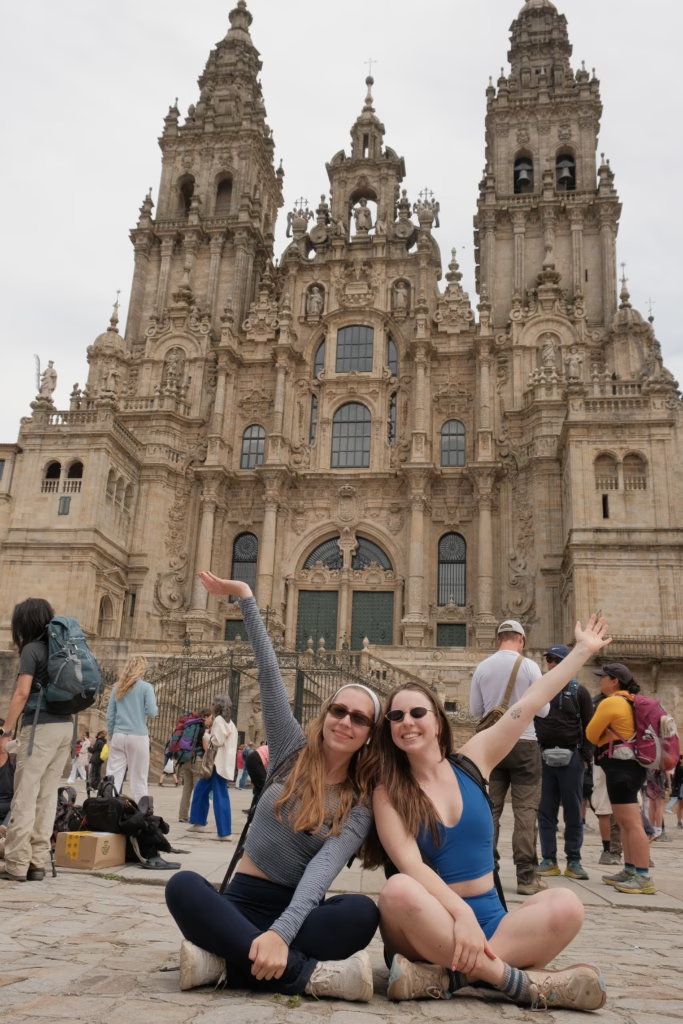
There is something incredibly special about arriving in Santiago after days of walking. Last time I arrived, I was by myself and didn’t have anyone to celebrate with besides some strangers who kindly congratulated me. This time I had someone who had shared the high and lows of the journey with me. Marcy and I hugged, cried, and celebrated together. It was an incredibly special moment.
We immediately sat down in the square alongside dozens of other pilgrims. We admired the cathedral and soaked it all in, before taking lots of photos to commemorate the moment.
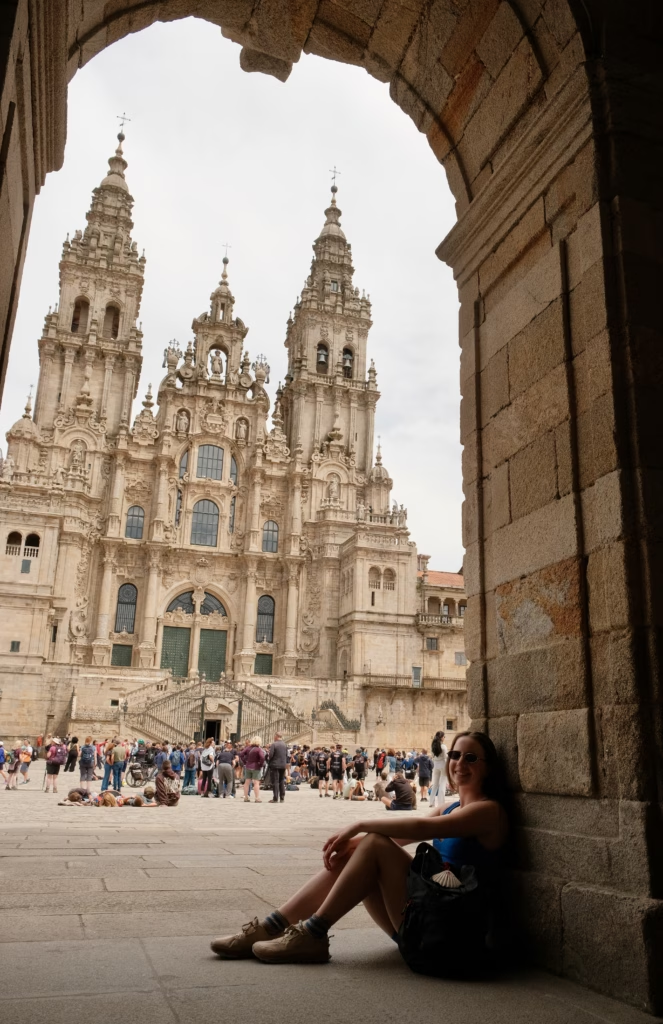
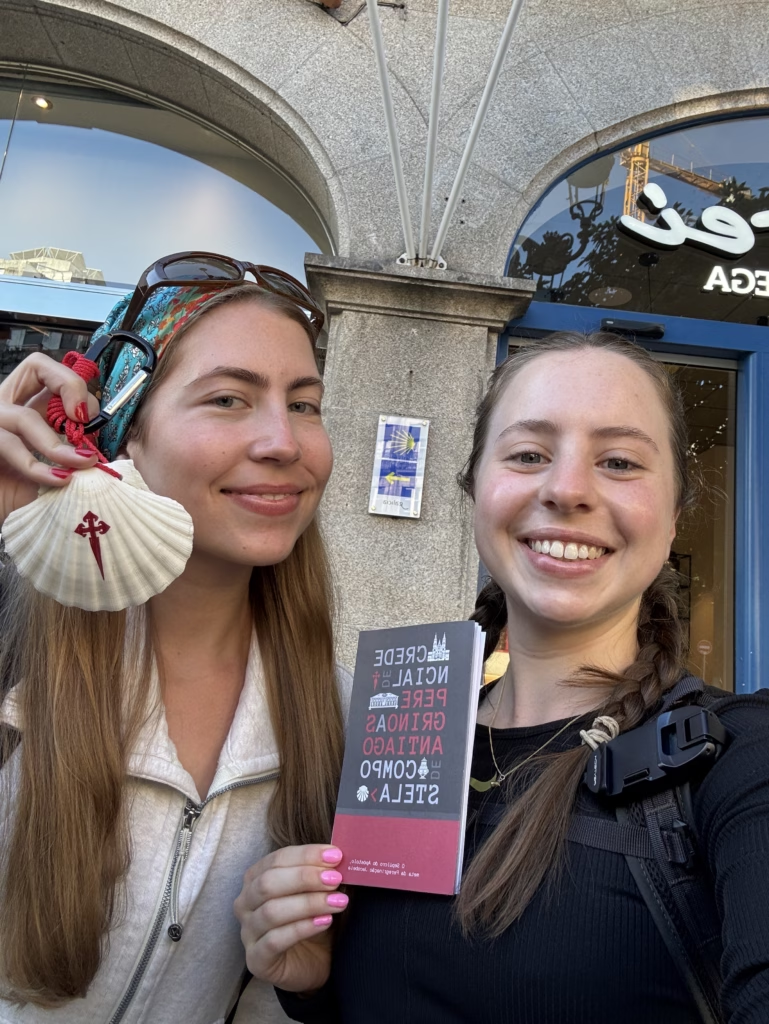
After enjoying the atmosphere in the square, we headed to the Pilgrim’s Office to get our Compostela, the official certificate that confirms you’ve completed the Camino. At around 4 pm, here was no line at all, and the entire process took less than five minutes.
From there, we walked to our hotel, showered, changed clothes, and got ready for one final Camino experience.
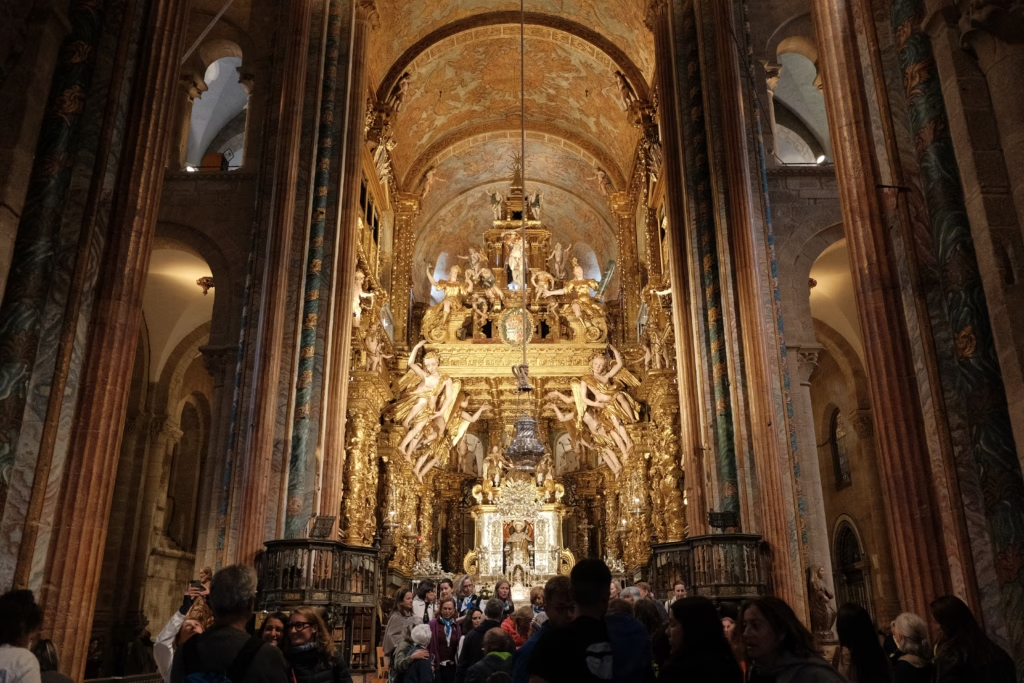
That evening, we attended the 7:30 PM Pilgrim Mass at the cathedral. As someone who isn’t particularly religious, it’s probably not something I would have chosen to do on my own. However, I’m really glad Marcy suggested it.
The cathedral was packed with hundreds of pilgrims who had completed their Caminos that day. If you’re planning to attend and want a seat, arrive very early. We got there about 20 minutes beforehand and had to stand for the entire service. Normally that wouldn’t be a big deal, but after walking 26 kilometers that day, standing felt very difficult.
Even so, it was a memorable way to end our Camino.
Where We Stayed in Santiago de Compostela
In Santiago we stayed at Hotel Universal, which was one of the nicest, and most expensive, hotels that we stayed at during the trip.
The location was excellent, just outside Santiago’s historic center and about a 10-minute walk from the cathedral. The room itself was comfortable and modern, making it the perfect place to recover after finishing the Camino.
The only downside was the price. We booked only a couple of weeks before our trip, and accommodation availability in Santiago was very limited, so it was one of our last options.
Price: €140
Rating: 8/10
Book your stay at Hotel Universal here.
Final Thoughts
I hope this guide helped if you’re considering walking the 5-day Camino Portugués from Vigo to Santiago. Whether you’re short on time, looking for your first Camino experience, or simply want to earn your Compostela, I think this route is a fantastic option.
One of the things I love most about the Camino is that no two experiences are ever the same. Even though this was my second time walking this route, it felt completely different from my first Camino. The people I met, the weather, the accommodations, and the experience of walking alongside my best friend made it feel like an entirely new journey.
That’s the beauty of the Camino. There is no right or wrong way to do it. You can walk fast or slow. For spiritual or physical reasons. Stay in albergues or hotels. Carry your backpack or use luggage transfer. Walk alone or with friends. At the end of the day, it’s your Camino, and it can be whatever you want it to be.
Save this post for later!
If you’re still planning your Camino, be sure to check out my other Camino de Santiago guides!
Everything I Wish I Knew Before Walking my First Camino de Santiago
Walking the Camino de Santiago Alone: My Solo Camino Portugues
Camino de Santiago Packing Guide: The most important essentials
Where to Stay on the Camino de Santiago: A Guide to Every Type of Accommodation
How Long Do You Really Need for the Camino Portugués?
My Complete 2-Week Coastal Camino Portugués Route
Best Time to Walk the Camino Portugues: May vs June
This site contains links to affiliate websites, and I receive an affiliate commission for any purchases made by you on the affiliate website, at no extra cost to you. Thanks!