This site contains links to affiliate websites, and I receive an affiliate commission for any purchases made by you on the affiliate website, at no extra cost to you. Thanks!
One of the biggest decisions you’ll make while planning your Camino de Santiago is where to stay each night.
From traditional albergues to cozy homestays and hotels, there are plenty of accommodation options to choose from along the Camino. The best one for you will depend on your budget, travel style, and the type of experience you’re hoping to have.
After walking the Camino Portugués twice, I’ve stayed in almost every type of accommodation. On my first Camino, I mostly stayed in albergues to keep costs low, while occasionally treating myself to a private room when I needed the privacy. On my second Camino, my friend and I stayed in a combination of hotels, pensiones, and homestays since we were able to split the cost.
In this guide, I’ll explain the different types of accommodation you’ll find on the Camino, along with the pros and cons of each, so you can decide which option is right for you.
Learn more about the Camino de Santiago!
Everything I Wish I Knew Before Walking my First Camino de Santiago
Walking the Camino de Santiago Alone: My Solo Camino Portugues
Camino de Santiago Packing Guide
Hiking the Camino Portugués in May: What to Expect
My Complete 2-Week Coastal Camino Portugués Route
How Long Do You Really Need for the Camino Portugués?
Save this post for later!
Types of Accommodation on the Camino de Santiago
Public Albergues
Public albergues are the most traditional accommodation option on the Camino. They are run by local governments, churches, or nonprofit organizations and are an important part of the Camino experience.
Unlike other accommodations, public albergues cannot be reserved ahead of time. They operate on a first come, first served basis, which means many pilgrims leave early each morning and walk quickly to try to secure a bed before they fill up.
Public albergues are very simple. You’ll typically sleep in large dormitory-style rooms with bunk beds and shared bathrooms. Sheets and towels are usually not provided, so you’ll need to bring your own sleeping bag and towels.
I’ve heard different things about the pricing, and I think some are “pay what you want”. Generally they cost around €10–20 per night.
I should mention that I haven’t personally stayed in a public albergue, so I can’t speak from experience. However, from talking to other pilgrims, many people love them because they’re affordable and provide the classic Camino experience.
Best for: Budget travelers looking for the traditional Camino experience
Private Albergues
Private albergues are the most common accommodation you’ll find along the Camino, and the one I would recommend for solo budget travelers.
Unlike public albergues, they are privately owned and can be reserved in advance. They’re very similar to a regular hostel, but cater to pilgrims walking the Camino. The amenities at each vary depending on how much you pay.
Private albergues always provide sheets. Some provide towels, or they charge an extra euro or two if you want to borrow one. Some also include breakfast, have privacy curtains on the bunk beds, or offer little extras that make your stay more comfortable.
Most private albergues cost between €20–50 per night depending on the location and amenities.
A lot of private albergues also offer private rooms, which are often much cheaper than hotel rooms, while still giving you the privacy of having your own space. But the private rooms tend to book up fast, so plan ahead.
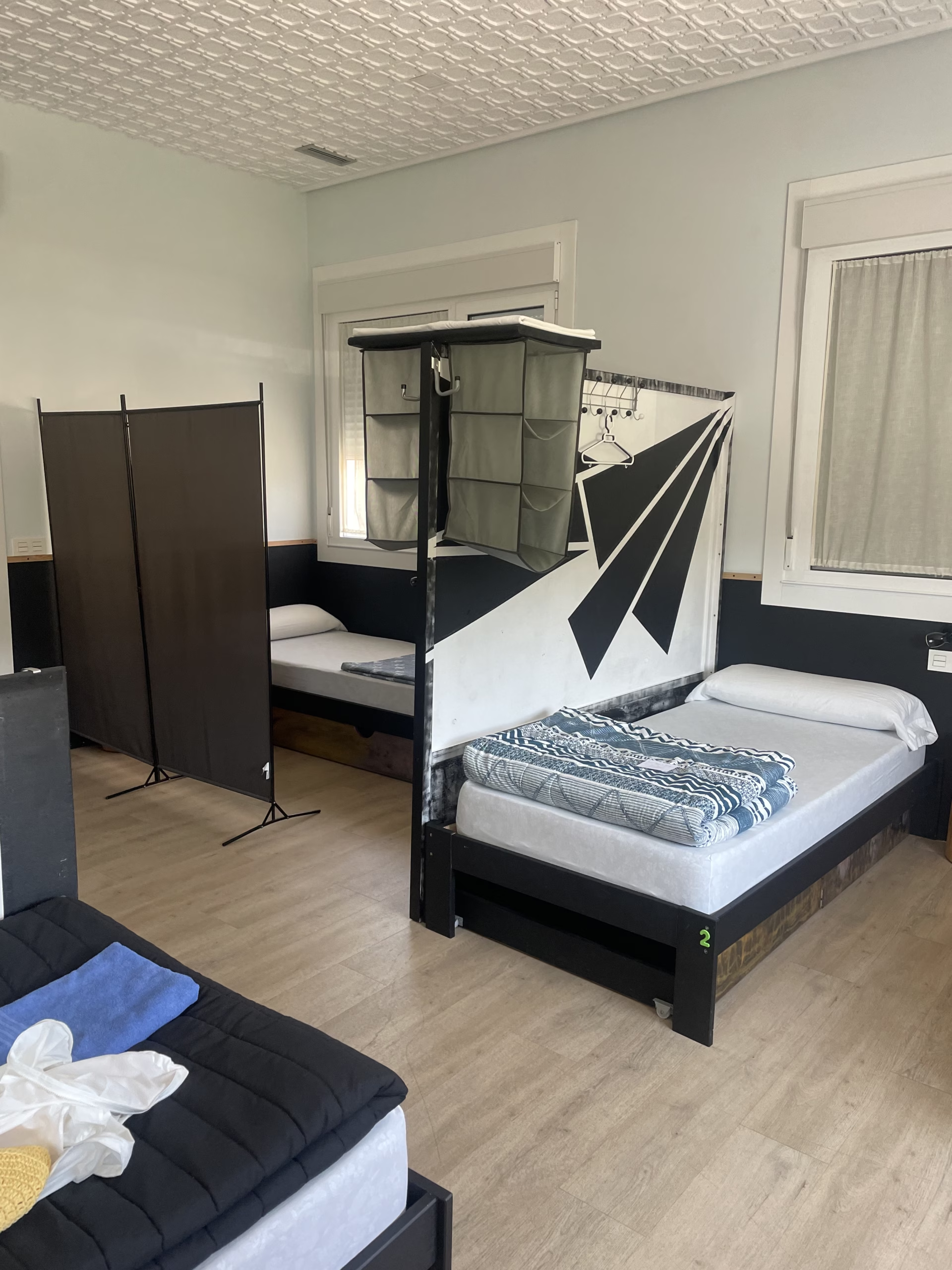
Best for: Solo travelers and budget travelers who want to meet other pilgrims while enjoying a little more comfort.
My favorite private albergue: During my first Camino, one of my favorite albergues was HI Youth Hostel in Vila do Conde, Portugal. It was clean, modern, and they offered female only dorms, which is a must for me. I loved the atmosphere in the common areas and the free breakfast that they served in the morning.
Pensiones
Pensiones are my favorite budget-friendly accommodation option on the Camino.
They’re usually locally owned apartments or small buildings with a handful of private rooms. Instead of sharing a large dorm, you have your own bedroom while sharing a bathroom and kitchen with the other guests.
I’ve stayed in several pensiones and have always had great experiences. Since you’re usually only sharing the bathroom with one or two other rooms, they never feel crowded or dirty like larger hostels sometimes can.
Another thing I love about pensiones is that many of them have a washing machine that’s free to use. If you’re traveling with limited clothing, being able to do laundry without paying extra is a huge bonus and something you won’t find at many hotels.
Also, a lot of pensiones offer single rooms, which are perfect for solo travelers who can’t afford the price of a double room at a hotel. They are usually the same price as an albergue, around €20-40 a night. For me, pensiones offer the perfect balance between affordability and privacy.
Best for: Solo budget travelers who value privacy.
My favorite pensión: During my most recent Camino Portugués I stayed at Pension Villa Mayer in Caldas de Reis. It was simple but comfortable, had a shared kitchen and washing machine, and the room overlooked the Camino route. Search for more pensiones through Booking.com.
Homestays
Homestays are one of the most unique experiences you can have on the Camino.
Instead of staying in a traditional hotel or hostel, you’re usually staying in someone’s home who has a few guest rooms available. It’s a great way to connect with and support locals.
The biggest downside is that homestays usually have very limited availability. Since they only have a handful of rooms, they tend to book up quickly, especially during the busy months.
Many homestays are also located between the main Camino towns rather than in them. This might seem inconvenient, but many provide dinner and breakfast, so you don’t have to worry about finding a restaurant nearby. If you plan your route right, you can use one of these remote stays to break up a longer stage into 2 shorter stages.
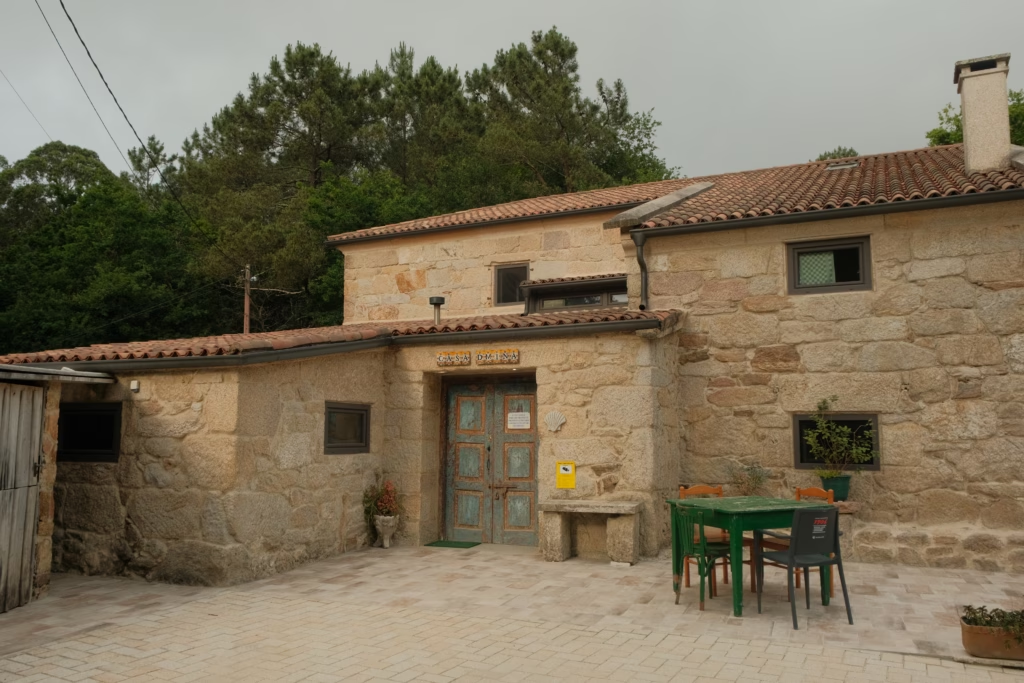
I’ve stayed in a few homestays on my Caminos, and they were easily some of my favorite accommodations.
Best for: Pilgrims looking for a unique, local experience.
My favorite homestay: Casa D’Mina in Souxuste, Spain, located between Redondela and Pontevedra, was a very special stay. It’s a beautiful house surrounded by nature with lots of outdoor space to relax. The owner had the kitchen stocked with snacks, breakfast items, and drinks, and even helped us order dinner from a nearby restaurant.
I also loved Dias House in Anha, Portugal, which sits between Esposende and Viana do Castelo along the Coastal Route. It was such a peaceful place to relax and the host provided an incredible breakfast spread in the morning.
Hotels
Hotels are the most private and comfortable accommodation option you’ll find on the Camino, but also the most expensive
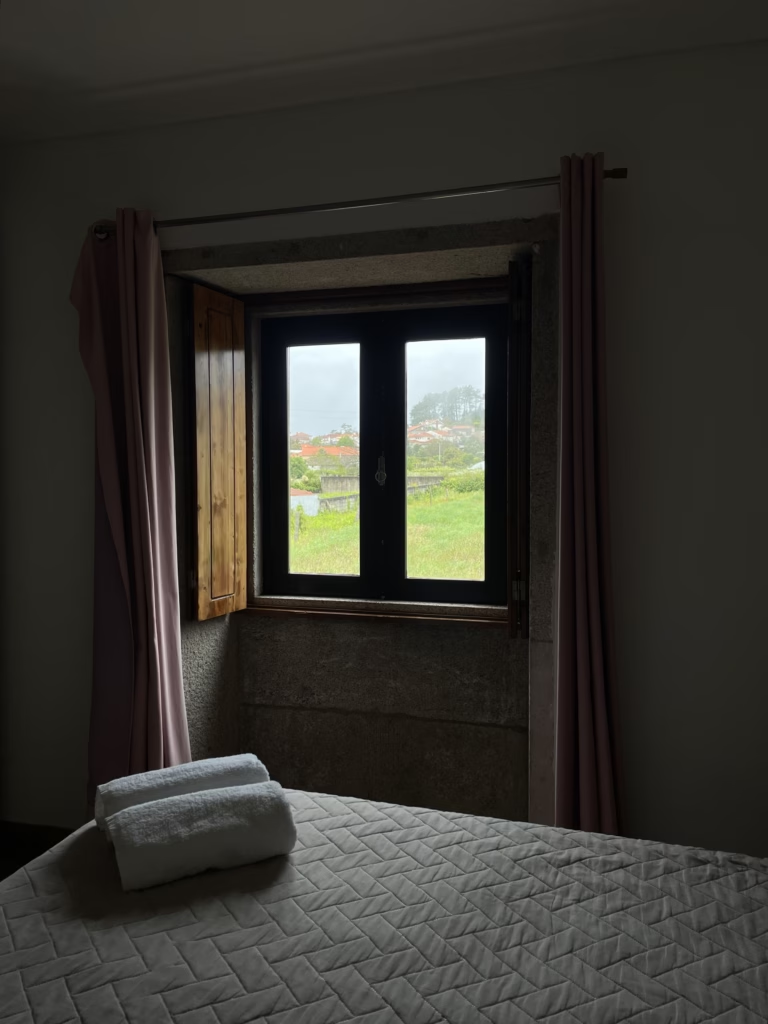
Just like any regular hotel, you’ll have your own room, private bathroom, reception desk, and often the option to eat breakfast there. Prices vary widely depending on the location, season, and amenities, but they’re generally the most expensive option.
That being said, hotels can actually be quite affordable if you’re walking with another person. Since you’re splitting the cost of the room, the price per person can sometimes be similar to staying in a private albergue. During my recent Camino with my friend, we stayed at hotels that cost around €80, or €40 per person, just a bit more than we would have payed for beds at albergues.
If you’re someone who values a good night’s sleep, a long hot shower, and a quiet place to relax after walking all day, hotels are hard to beat.
Best for: Couples, friends, or anyone looking for maximum comfort and privacy.
My favorite hotel: Hotel Atlántico in Vigo was one of my favorite hotel stays. It was spacious, comfortable, and in a perfect location to begin the Camino the following morning.
Where to book accommodations for the Camino?
For almost all of my Camino accommodations, I used Booking.com. It has the largest selection of hotels, private albergues, pensiones, and homestays, and it makes it easy to manage all of my bookings in the same place.
A few things to pay attention to when booking your accommdations:
- The Reviews – Try to book places with a rating of 8 starts or more. And don’t just look at the ratings, also read the reviews from pilgrims who have stayed there.
- The Cancellation Policy – If you think you’ll want to be flexible and change your Camino route along the way, only book stays with free cancellation.
- Luggage Transfer – If you plan on using a service like Pilbeo to transport your bags each day, make sure you choose places with a reception desk. Many pensiones unfortunately don’t have a reception where you can leave your bags.
Read More: Camino de Santiago Packing Guide
Do you need to book Camino accommodations ahead of time?
This is one of the most common questions people have while planning their Camino. Can you just go with the flow and book accommodations the day of? Or should you plan your route and book all your stays before you even start your journey? Well, it depends on they type of accommodations you want to stay in.
If you know you want to stay in unique homestays and highly-rated hotels, then yes, I absolutely recommend booking ahead. Homestays and small hotels usually only have a handful of rooms, so they tend to book up quickly, especially during the busy months. The nicest and most budget-friendly places are often the first to sell out.
Private albergues are a little different. Since they typically have more beds available, you can often book them just a few days in advance during most of the year. However, if you’re picky about where you stay like I am, or you specifically want a female-only dorm, I would still recommend booking a few weeks ahead. The best-rated albergues do fill up.
Public albergues cannot be reserved at all. Since they’re first come, first served, you’ll need to arrive early if you’re hoping to secure a bed.
Personally, I booked all of my accommodations about two weeks before my Caminos, and I was able to find great places to stay. I did have to cancel a few places and rebook different ones just a few days before, but I was still able to find good places.
Which Accommodation Is Right for You?
If you’re still not sure which option to choose, here’s what I would recommend:
If you’re on a tight budget…
Choose a public or private albergue. They’ll give you the classic Camino experience while keeping costs low.
If you want to meet other pilgrims…
Stay in private albergues. They’re one of the easiest places to make friends on the Camino.
If you’re traveling solo but value privacy…
Book a pensión. They’re affordable, comfortable, and offer much more privacy than a dorm room.
If you’re looking for a unique Camino experience…
Stay in at least one homestay. They will be some of the most memorable nights of the journey.
If you’re walking with a friend or partner…
Stay in hotels. Since you’re splitting the cost of a room, they’re often much more affordable than you’d expect.
If you’re like me…
Mix it up and stay in a mix of accommodations! On both of my Caminos, I stayed in a combination of albergues, pensiones, hotels, and homestays. Every night felt a little different, which was part of the fun!
At the end of the day, there isn’t one “best” type of accommodation on the Camino. Each option offers a different experience, and that’s part of what makes the journey so special.
Save this post for later!
Continue reading about the Camino de Santiago here…
Everything I Wish I Knew Before Walking my First Camino de Santiago
Walking the Camino de Santiago Alone: My Solo Camino Portugues
Camino de Santiago Packing Guide
Hiking the Camino Portugués in May: What to Expect
My Complete 2-Week Coastal Camino Portugués Route
How Long Do You Really Need for the Camino Portugués?
This site contains links to affiliate websites, and I receive an affiliate commission for any purchases made by you on the affiliate website, at no extra cost to you. Thanks!